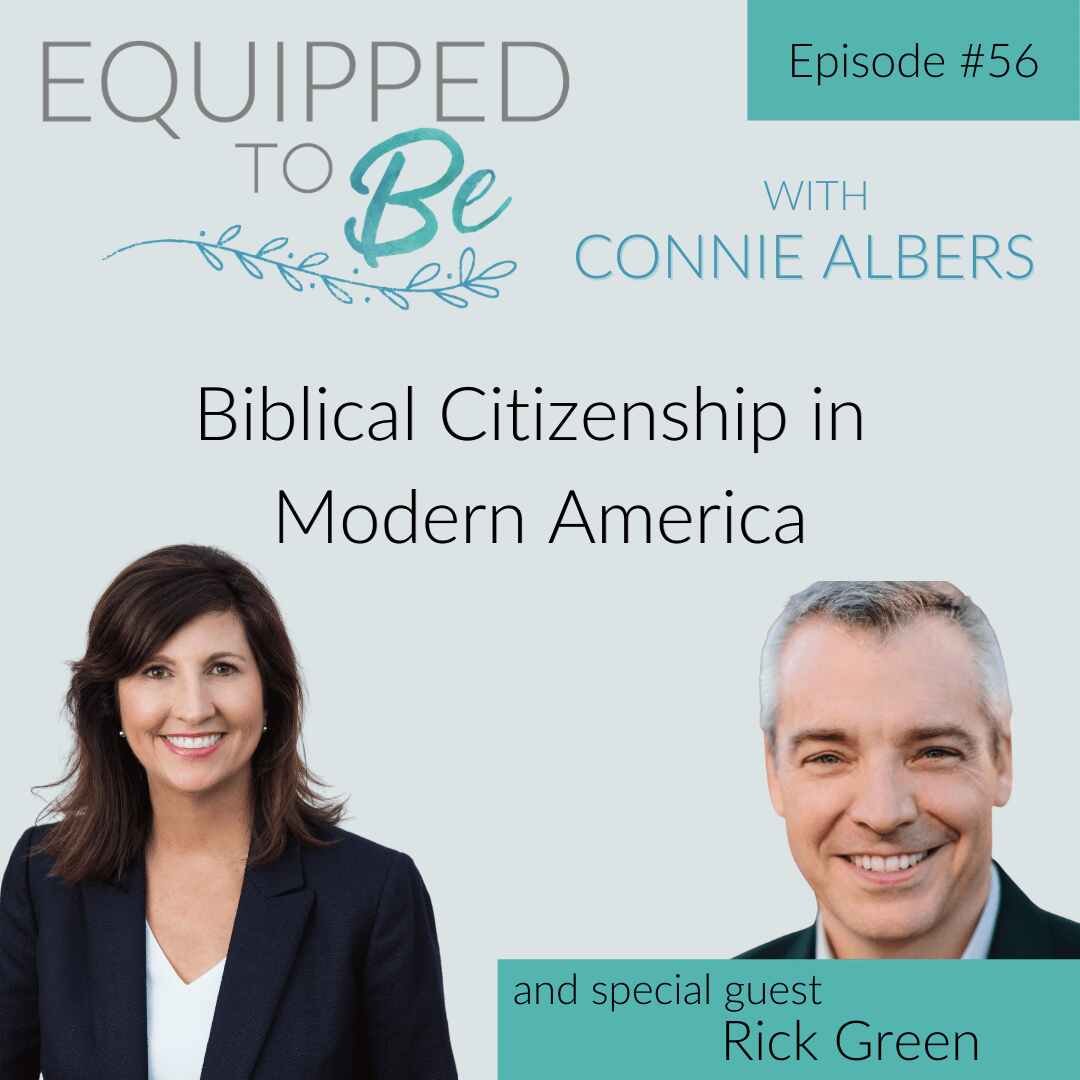
Biblical Citizenship is grounded in faith and encourages Americans to embrace their freedoms. America is changing. What part do you play? Rick Green joins me to talk about Biblical Citizenship and how we can protect the freedoms we’ve enjoyed for centuries.
Rick shares action steps we can all do!
Biblical Citizenship Action Steps
Accept responsibility.
Don’t wait for someone else to step up.
Find a place where you can get involved.
Starve the fear by replacing it with faith.
What Will It Take?
It takes courage! A courage that comes from trusting God.
It takes wisdom! Wisdom to how to be part of the solution, not the problem.
It takes discernment! Knowing you have a part to play in saving our country and protecting our freedoms for your children and grandchildren.
What Can We Do Right Now?
Look for opportunities to debate others.
Develop a strong backbone. You’re standing up for your kids and grandkids.
Pray. Remember who has authority.
Teach your kids the Constitution. So they understand its intent for American citizens.
Being a Biblical Citizen in Modern America is knowing we can’t separate faith from freedom. God granted our rights and freedom, not the government.
About Rick Green
Rick Green is a former Texas State Representative, national speaker, author, and radio host. He is America’s Constitution Coach. He and his family travel the nation speaking on America’s forgotten history and heroes, emphasizing our moral, religious, and constitutional heritage. Rick and David Barton co-host the national daily radio program, WallBuilders Live! He is the author and executive producer of Constitution Alive, America’s most engaging and entertaining study of the U.S. Constitution.
Rick and his wife, Kara, founded Patriot Academy, an elite leadership training program specializing in applied civics with a Biblical, historical, and Constitutional Foundation. Through their Constitution Coach program, they are training and empowering adults across the nation to educate their communities about the Constitution.
Rick and Kara have 4 older kids and two grandchildren. They have been homeschooling for over 20 years.
Self-protection isn’t new. People disappoint us, so we put up walls. God doesn’t answer our prayer, so we stop praying. We deal with pain and suffering by self-protecting. It feels safer. But, is it how Jesus handled pain and suffering? Did he avoid people who hurt him? No. Then maybe we should live by his example.
Life can be messy. Very messy. Faith might seem hard to hold on to, especially if your prayers seem to fall on deaf ears. But, are you allowing self-protection to hurt your faith and friendships?
Guilty of Self-protection?
A friend recently shared something about self-protection from the book 40-Days to Decrease by Alicia Britt Chole. Her text was so good that I had to pull my own copy off the shelf and read more.
I found myself wondering if I’m guilty of self-protection. Sadly, I am. Most of us are. I think the longer we live, the more pain and suffering we’ll experience, but we have a choice: Put up walls or let our light shine by being different.
In this episode, I share some reasons people self-protect, what God’s taught me about not using self-protection to keep others at a distance, and why we should follow Jesus’s example.
The Solution to Self-Protection
Instead of avoiding people and uncomfortable situations, Jesus chose to be fully present. He knew what was about to happen to him. He knew he would be betrayed, mocked, and rejected. He could have put up walls and distanced himself from others. Why didn’t he? Because he knew freedom comes through suffering, not avoidance. He endured much, but he embraced the moment.
Are you hurting your faith and friendship by protecting yourself? You don’t have to live that way. It’s a choice. Freedom doesn’t come by way of not experiencing pain or suffering. It’s the opposite.
Take some time to consider the impact of living a life that constantly tries to keep God and friends at bay. May I invite you to consider removing the walls you’ve so carefully constructed so your faith and friendships can flourish?
*If you are in an abusive situation, seek help. Don’t stay in an abusive relationship or put yourself in harm’s way.
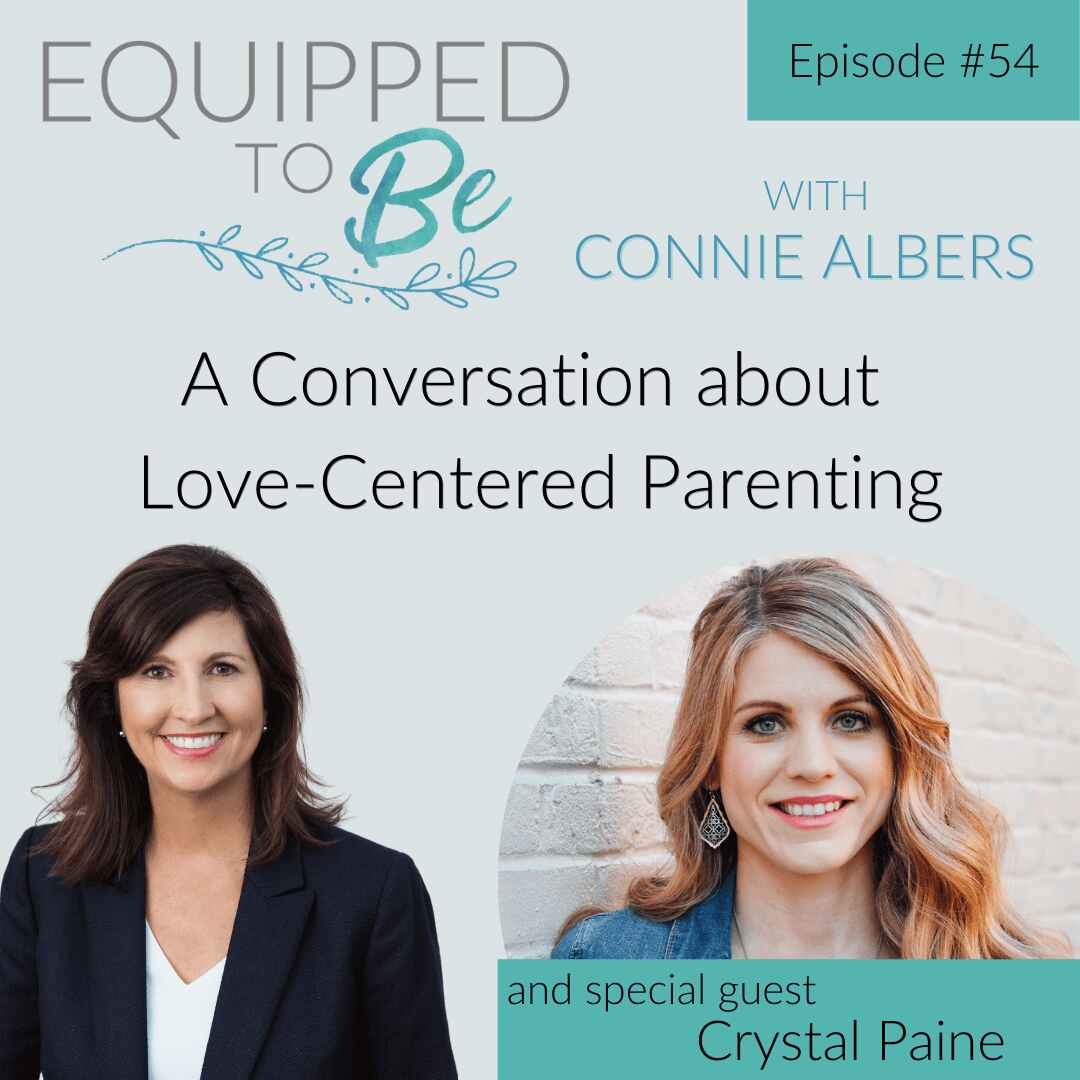
With all the parenting books available, what makes Love-Centered Parenting, by Crystal Paine, unique? Like many books, where the authors focus on results-based parenting. Love-Centered Parenting has a different approach.
To many, Crystal Paine had it all together – a happy marriage, a successful business, a vibrant faith, and national selling books as the Money Saving Mom®. But one day, her world turned upside down.
The crisis she and her family faced was the being of a transformational process in her parenting. Before she could make changes, God had to change her from the inside out. It was through this painful process that she discovered a new way to parent her children.
In this episode, Crystal shares her raw story of transformation and what lead to Love-Centered Parenting. This honest conversation about God’s love, her transformation, and how her parenting has changed.
I believe you will be encouraged by her vulnerability and sincerity to reconsider their parenting approach. Love-Centered Parenting is not a formula or easy steps to follow. Crystal’s goal is to bring freedom, hope, and healing with her new book.
Love-Centered Parenting Thoughts
Focus on what I can learn from this.
Become a student of your child.
What speaks love to your child?
What makes your child feel loved?
Let your kids make choices.
Love them where they are.
Walk with them.
Do not try to control them.
From the book, Love-Centered Parenting:
The 3 Words That Changed My Parenting
One day, after speaking at a conference, I was dialoguing with another one of the conference speakers via Twitter. I don’t remember the details of what we were talking about, but the one thing that stands out is that at the end of the online conversation, she wrote, “Live as loved.” Those three little words stopped me in my tracks. “Live as loved.” (p. 31)
Parenting is a journey full of twists and turns. Some are fun and exciting, while others are painful. Crystal encourages moms to keep it simple.
About Crystal Paine
Crystal Paine is the founder of MoneySavingMom.com, host of “The Crystal Paine Show” podcast, New York Times bestselling author of Say Goodbye to Survival Mode, and author of Money-Making Mom. Her desire is to help women across the globe live with more joy, purpose, and intention in their everyday lives. She lives with her husband and kids in the Nashville, Tennessee area, where she is actively involved in her local church. Her biggest passions are helping women understand how the Gospel can radically transform their lives, raising awareness for foster care, going on adventures with her family (locally, domestically, and internationally), finding great deals at the grocery store, heartfelt
conversations, and trying to read too many books at one time!
In Love-Centered Parenting, Paine gives examples of how she’s learned to listen to her children, sit and be present, ask meaningful questions, and not pass judgment. In addition to hard-won lessons, major changes, and a radically different parenting approach, Paine also provides practical,
tangible resources for parents.
Do the words of others linger in your mind? You can hear them play over and over again. You want to erase their words, but you can’t get them out of your head. It’s because we’ve given people headspace. It’s like giving free rent in my head to others, and it has to stop.
Most people can remember a time when someone said something they couldn’t let go of:
You’re a jerk!
You’re no good at that!
You should give it up and try something else!
Those become haunting words that trigger emotions and attitudes, causing us to alter our behavior.
Allowing others to speak life-giving words to us is a good thing. Those are the words we want to linger in our minds, but giving headspace to the wrong person, who speaks untruths or faulty information, can be detrimental and derail our lives.
Stop Giving People Headspace
We have to stop allowing people to take up residency in our heads. By allowing someone to take up headspace, you permit them to influence your thoughts or beliefs about yourself.
It can happen to all of us if we don’t realize that what’s going on.
Be careful what you allow others to say about you to you. Not everything someone says to you is true about you! Let me repeat… not everything someone says to you about you is true!
How to Keep Someone from Getting into Your Head
Use God’s Word to replace untruths.
Examine our thought processes often. If you catch yourself dwelling on negative words, replace them with the truth. When we allow them to linger, they can derail, discourage, and defeat us.
Take your thoughts captive. If you start to doubt your ability, remember God has equipped you. He will lead you, and He will be with you.
Avoid people who are thoughtless with their words.
Bottom line: Don’t allow other people’s words to take up headspace. Stop giving people headspace!
What is the future of homeschooling? The future looks bright!
While homeschooling and at-home learning surged due to school closures, parents are considering continuing this educational method in the future. The freedom and flexibility that comes with learning at home are among the many reasons parents list.
Although parents had little time to figure out how to pivot to at-home learning, parents overcame many obstacles thanks to the vast support they found online. Bloggers, vloggers, online classes, and social media platforms offering a litany of support that most parents didn’t know existed until now.
Parents discovered an educational world with the click of a few buttons, and this vast network is expanding every day. Maybe your family will be one of the millions to choose homeschooling in the future?
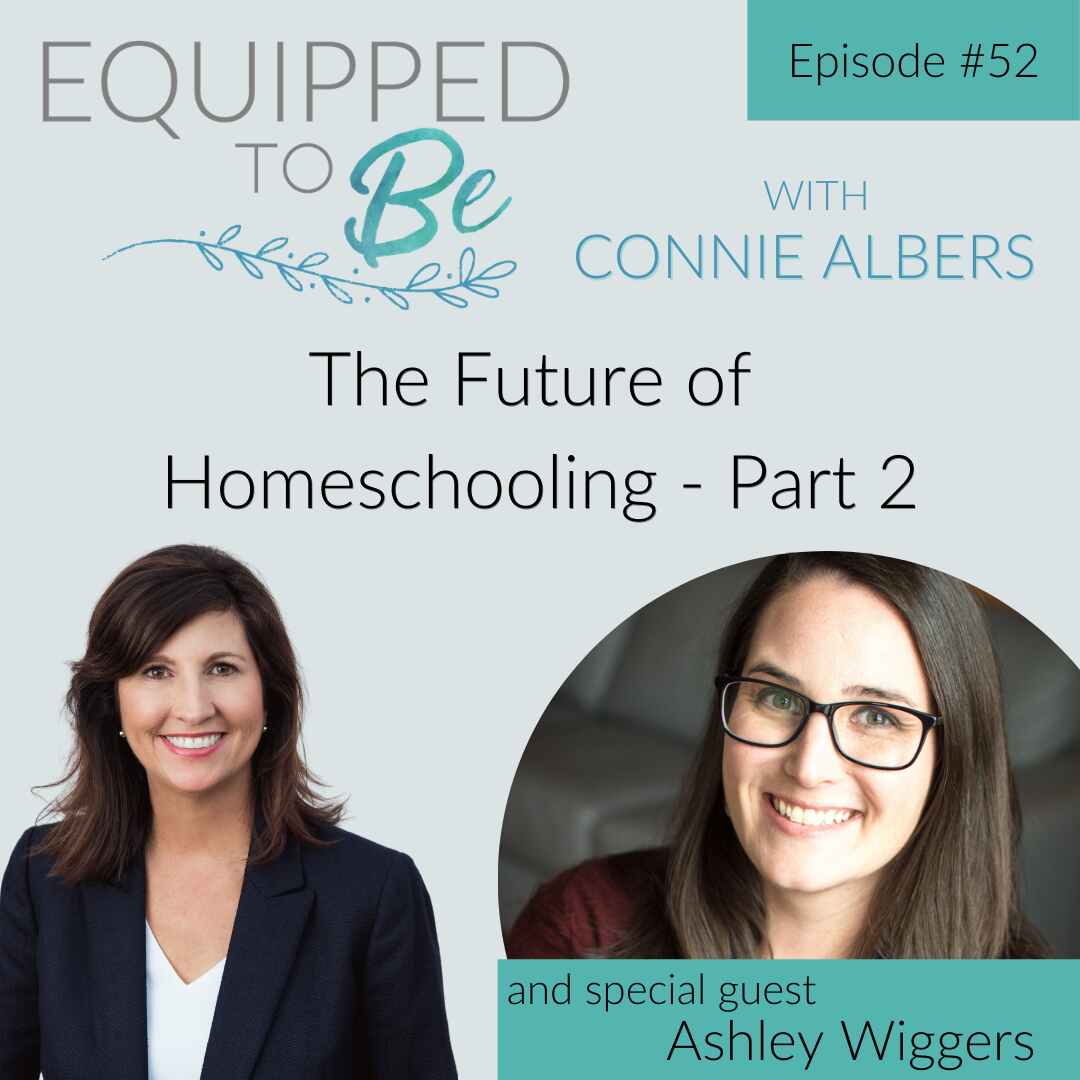
Ashley Wiggers is back to talk with me about the future of homeschooling.
The Future of Homeschooling
The mindset of homeschooling.
Knowing your kids.
Focusing on the big picture.
I understand all the confusion, stops and starts, and virtual glitches have caused undue stress for many students and their parents trying to stay on pace. At-home learning hasn’t worked for every family. I also know the world of educating children has vastly changed for Americans. But more families are taking a closer look at all the educational options for their children, which is a good start.
About Ashley Wiggers
Ashley Wiggers speaks at homeschool seminars, serves as Public Relations Director for GeoMatters, and is the author of the Profiles from History series. She also joins Homeschooling Today magazine as a co-executive editor and writes the column, Lessons My Mother Taught Me.
Ashley grew up in the early days of the homeschooling movement. She was taught by her parents, Greg and Debbie Strayer, who are authors of numerous homeschooling materials and were part of the founding group of Homeschooling Today magazine back in 1992. As a homeschool graduate, Ashley has a deep appreciation for the opportunity to homeschool and the need for encouragement and support of homeschooling families.
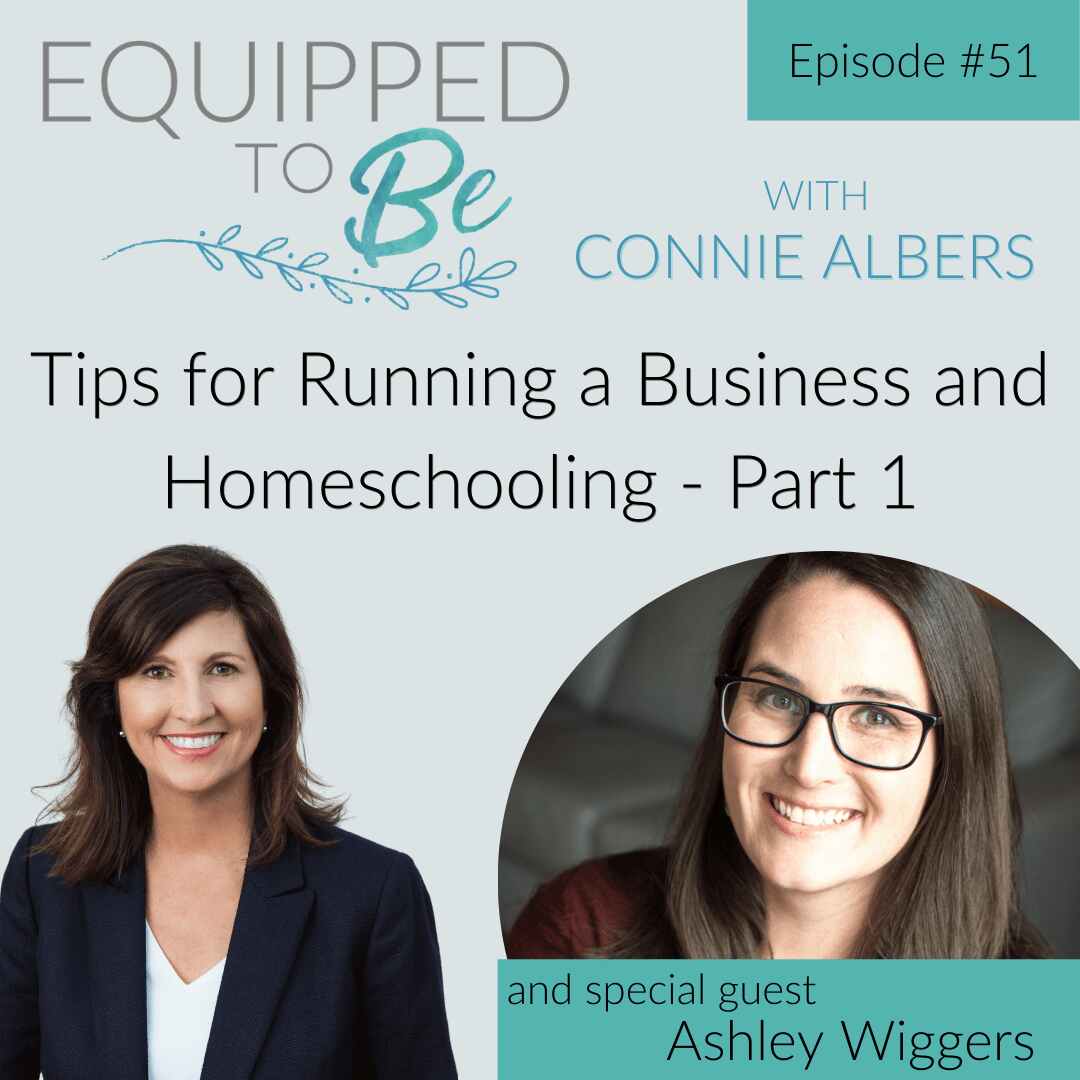
Are you among millions of parents trying to run a business and homeschooling your children? You’re not alone. Millions of parents are faced with the tension that comes with juggling deadlines, making sure the kids are doing school, planning meals, and spending hours in the kitchen.
Whether you’re working a few hours or full-time, the challenge to fit it all in is real. The guilt and frustration from day-to-day can leave you discouraged and worn out.
Running a Business and Homeschooling
Today, Ashley Wiggers is joining me on the podcast. She is a second-generation homeschool graduate whose parents were pioneers in the homeschool movement. Greg and Debbie Strayer were respected leaders, mentors, speakers, authors, and magazine owners/editors. Ashley grew-up watching them juggle the demands of running a business and homeschooling.
We discuss some of the lessons she learned as a homeschool graduate and how she plans to follow their example.
Tips for Your Journey in Business and Homeschooling
Being fully present
Plan memorable moments
Set realistic goals
Create a love of learning
Trust the Lord
Protect what matters most
About Ashley Wiggers
Ashley Wiggers speaks at homeschool seminars, serves as Public Relations Director for GeoMatters, and is the author of the Profiles from History series. She also joins Homeschooling Today magazine as a co-executive editor and writes the column, Lessons My Mother Taught Me.
Ashley grew up in the early days of the homeschooling movement. She was taught by her parents, Greg and Debbie Strayer, who are authors of numerous homeschooling materials and were part of the founding group of Homeschooling Today magazine back in 1992. As a homeschool graduate, Ashley has a deep appreciation for the opportunity to homeschool and the need for encouragement and support of homeschooling families.