The odds of becoming a published author are low, but becoming a bestselling author is extremely difficult. Larry Loftis not only beat the odds, but he has also hit the NYT bestseller list multiple times. He is a highly acclaimed nonfiction thriller author who specializes in writing about WWII espionage.
Mr. Loftis joins me for a candid interview to discuss how he did beat the odds and the lessons he learned along the way.
I’m often asked how I got Parenting Beyond the Rules published as a new author. My reply: It’s a God story. As with most God stories, other people are involved.
Part of my journey to becoming a published author included talking to people who were further along in the publishing world than me. One of the people God used in my journey is the highly acclaimed author Larry Loftis. I’m grateful and honored that he sat down with me for a two-part interview.
Key Takeaways from Larry
Commit to excellence.
Do your best
Be committed
Hone your craft
Put time into getting better
It will take years
There will defeat
Aim high
Persevere
About Larry Loftis
Larry Loftis is the New York Times and international bestselling author of the nonfiction spy thrillers CODE NAME: LISE: The True Story of the Woman Who Became WWII’s Most Highly Decorated Spy and Into the Lion’s Mouth: The True Story of Dusko Popov—World War II Spy, Patriot, and the Real-Life Inspiration for James Bond. His third nonfiction thriller, The Princess Spy: The True Story of World War II Spy Aline Griffith, Countess of Romanones, is now out and was an instant New York Times bestseller. His books have been translated into multiple languages around the world, including Dutch, Portuguese, Chinese, Czech, and Serbian.
Prior to becoming a full-time writer, Mr. Loftis was a corporate attorney, publishing scholarly legal articles in the University of Florida Law Review, Suffolk Transnational Law Journal, Georgia Journal of International and Comparative Law, Florida Bar Journal, National Law Journal, and Florida Banking. He also has served as a Teaching Fellow at the University of Florida Law School, where he taught writing and appellate advocacy. He received his B.A. and J.D. from the University of Florida, where he served on the Law Review as Senior Executive Editor and Senior Articles Editor.
Marriage can be messy and far from normal. But what can we learn about loving our spouse when they don’t love us back? How do we trust God to work in us when hope seems lost? Can God heal your marriage?
God has not called us to be normal because normal doesn’t exist. Not in life or our marriage. When we let go of our expectations and trust God, we have peace knowing He can repair the broken and redeem what was lost.
Jill Savage, author, speaker, and podcaster, joins me for an honest conversation about life and marriage when anything but normal.
Rebuilding Your Marriage
1. Always stand for your marriage. God gives us one assignment: to love our husband. How can you love your spouse when they don’t love you back?
2. Know your husband. In marriage, there are seasons. With each season, we change, and our spouse changes. In every season, we need to take time to understand your husband’s struggles.
3. Are you paying attention to the slow fades that could be causing you hurting relational closeness?
4. What God tools do you need to acquire to keep your marriage strong?
5. Loving the unloveable is an opportunity to remember you aren’t always lovable.
6. Don’t make saving your marriage an idol. Be intentional to keep God on the altar.
7. Your circumstances don’t dictate your faithfulness. Never forget that God is always at work, even if you don’t see it.
“I will restore to you the years that the swarming locust has eaten.”
Joel 2:25a (ESV)
There is always hope for your marriage!
About Jill Savage
Jill Savage is an author and speaker who is passionate about relationships. Her honest, engaging communication is strengthened by her ability to make her audience laugh while they learn.
Jill is the author of No More Perfect Podcast host and the author of fourteen books, including Empty Nest, Full Life, Real Moms, Real Jesus, the best-selling No More Perfect Moms, No More Perfect Kids, Better Together, and No More Perfect Marriages. Jill and her husband, Mark, live in Illinois and have five children and eight grandchildren.
References and Links
The following may contain affiliate links.
Visit Jill’s website site and get her 3 free ebooks
We enter life curious. We wonder about the world around us, but as the years unfold that natural curiosity for life and learning can fade. So, how can we cultivate curiosity in our children?
In this episode, Connie talks with Cheryl Bastian about how to cultivate curiosity in our children.
How do you remain steadfast?
Be flexible
Foster conversation
Be specific
Be inviting
Let go of our expectations
How to become a student of your child?
Be willing to change
Listen and discern
Show interest
Get on their level
Observe what they spend time doing?
Focus on the clues they give by watching them
Note what excite them
Give margin in your day for discovery
Curiosity fuels learning. Therefore, we must be intentional to cultivate our child’s natural curiosity throughout their childhood. Don’t let the daily schedule keep them from exploring the world of possibilities.
“Our family is a learning family. We’re in this together.” – Cheryl Bastian
About Cheryl Bastian
Cheryl’s home education journey spans twenty-seven years with eight children, ages thirty-one to five. Her vast experiences allow her to journey alongside families at many stages of learning. As an author and speaker, Cheryl encourages parents to be intentional, real, and relational as they raise life-long learners. Her resources are available at www.cherylbastian.com.
Homeschooling is too hard! Where do I start? I could never do that! Are common questions parents ask when considering if they should homeschool their children.
I frequently thought, “I’m not qualified to teach my kids. I don’t have a teaching degree. I don’t know phonics or Physics.” The cool part is I didn’t need any of those to homeschool. I needed the Lord to lead me, a willing heart, a desire to figure it, and the resolve to stick with it. And, my friend, that’s what you need too! You don’t have to have a degree to teach you children either.
Homeschoolers have a proven track record of successfully homeschooling their children.
Make Homeschooling Easy!
The one tool you should have is Everything You Need to Know about Homeschooling: A Comprehensive, Easy-to-Use Guide for the Journey from Early Learning through Graduation by Lea Ann Garfias. Lea Ann created a complete reference guide to help you with everything you need to successfully tackle homeschooling in your own style, filling your experience with confidence, grace, and the joy of learning.
Homeschooling is an educational option worth serious consideration. Don’t let fear or doubt stop you from embracing the homeschool lifestyle.
Homeschooling doesn’t have to be hard! It can be made easy with the right tools.
About Lea Ann Garfias
Lea Ann Garfias is a homeschool graduate, a homeschooling mother of six, and the author of four books, including three on homeschooling. She and her husband, David, live in Dallas, Texas. Besides “author,” she holds the titles of “professional violinist,” “French-press owner,” and “friend.”
Is school driving out your child’s creativity? Is a formal degree the only way to a fulfilling or financially rewarding career? Is your child’s degree making your child unhirable?
After fifteen years of teaching college students, Dr. Ai Addyson-Zhang quit her job as a professor.
Kids are taught they need a college education to enjoy a fulfilling or financially rewarding life. But that isn’t true! Dr. Ai believes we might be doing a disservice to our kids by telling them college is the only way to succeed or that college education might be making them unhirable in the real world.
Today’s kids need permission to do everything. Kids are so afraid of making a mistake or not getting an “A” that don’t try! They don’t know how to think on their own. Our current educational system is driving the creativity, innovation, and curiosity out of our children. And we need to change that.
Tune into my conversation with Dr. Ai we discuss the loss of child creativity.
Is School Driving Out Your Child’s Creativity?
Where does the best education begin?
What can parents do to give their child an excellent education, not a quality one?
Why do we have to teach our children to be learners?
What should the purpose of education be?
Where does the best education begin?
Should everything be based on academics?
What can parents do to give their child an excellent education, not a quality one?
It’s not uncommon for employers to unschool college grads so they can unlearn and relearn how to be creative.
What Can Parents Do to Maintain Their Child’s Creativity
Stay informed.
Stay critical
Remember, the teacher doesn’t always know best.
Embrace Failures
Let our kids try and fail.
About Dr. Ai Addyson-Zhang
Dr. Ai Addyson-Zhang is an educator and an entrepreneur. She received her MA and Ph.D. in Communication from Syracuse University and the University of Maryland. Ai is the founder of Classroom Without Walls, an alternative school to future-proof the next generation. Ai is also an Adobe Insider, Adobe Education Leader, and HubSpot Academy Instructor. Dr. Ai additionally serves as a SEMrush Webinar guest and host.
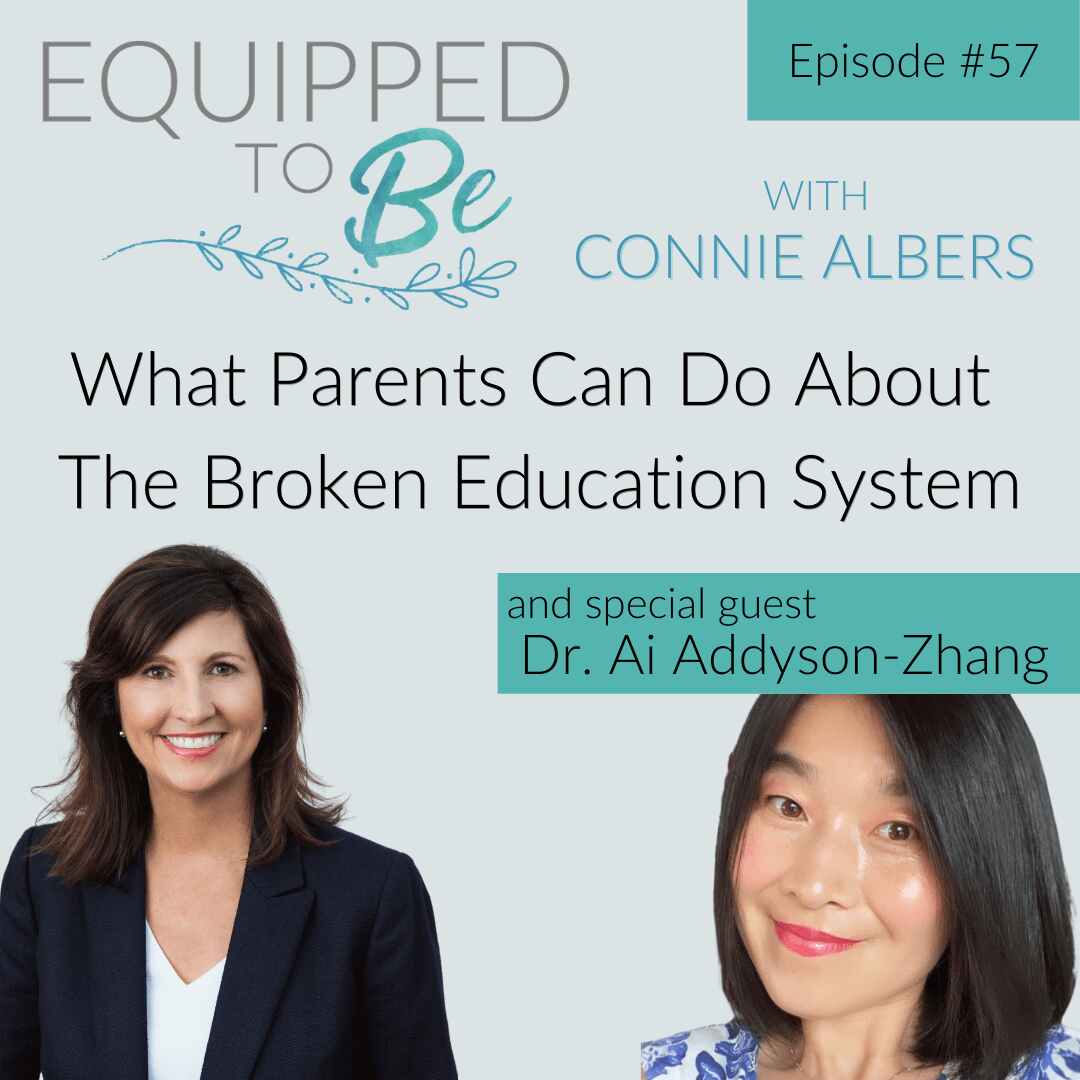
Parents know the public educational system is broken, but most don’t know what they can do about it. Dr. Ai Addyson-Zhang was a college professor for over a decade and knew firsthand what was happening in the classroom and why she walked away from her teaching job to pursue something better. What can you do about the broken education system?
In this episode, we discuss why the system is broken, and practical things parents need to know so their child can obtain a superior education that focuses on learning, not test-taking.
The Broken Education System
Why kids are falling behind
How the system focuses on theories, not on the application
How parents can foster a love of discovery and learning
Why kids need practical experience to learn concepts
What parents can do to give their child a superior education, not a quality one
Why kids need to questions their teachers
How the learning process really happens
Conclusion
Parents can’t rely on a broken education system to provide a superior education for their children. My goal is to help you learn what you can do with your child at home to foster a love of learning that will continue throughout their lives.
About Dr. Ai Addyson-Zhang
Dr. Ai Addyson-Zhang is an educator and an entrepreneur. She received her MA and Ph.D. in Communication from Syracuse University and the University of Maryland. Ai is the founder of Classroom Without Walls, an alternative school to future-proof the next generation. Ai is also an Adobe Insider, Adobe Education Leader, and HubSpot Academy Instructor. Dr. Ai additionally serves as a SEMrush Webinar guest and host. Dr. References and Links