
What are parents asking artificial intelligence about their children when no one else is listening?
“Is this normal?”
“Why won’t my child listen to me?”
“Should I take the phone away?”
“Why is my teenager pulling away?”
“Am I being too strict?”
“Did I handle that wrong?”
“Have I damaged our relationship?”
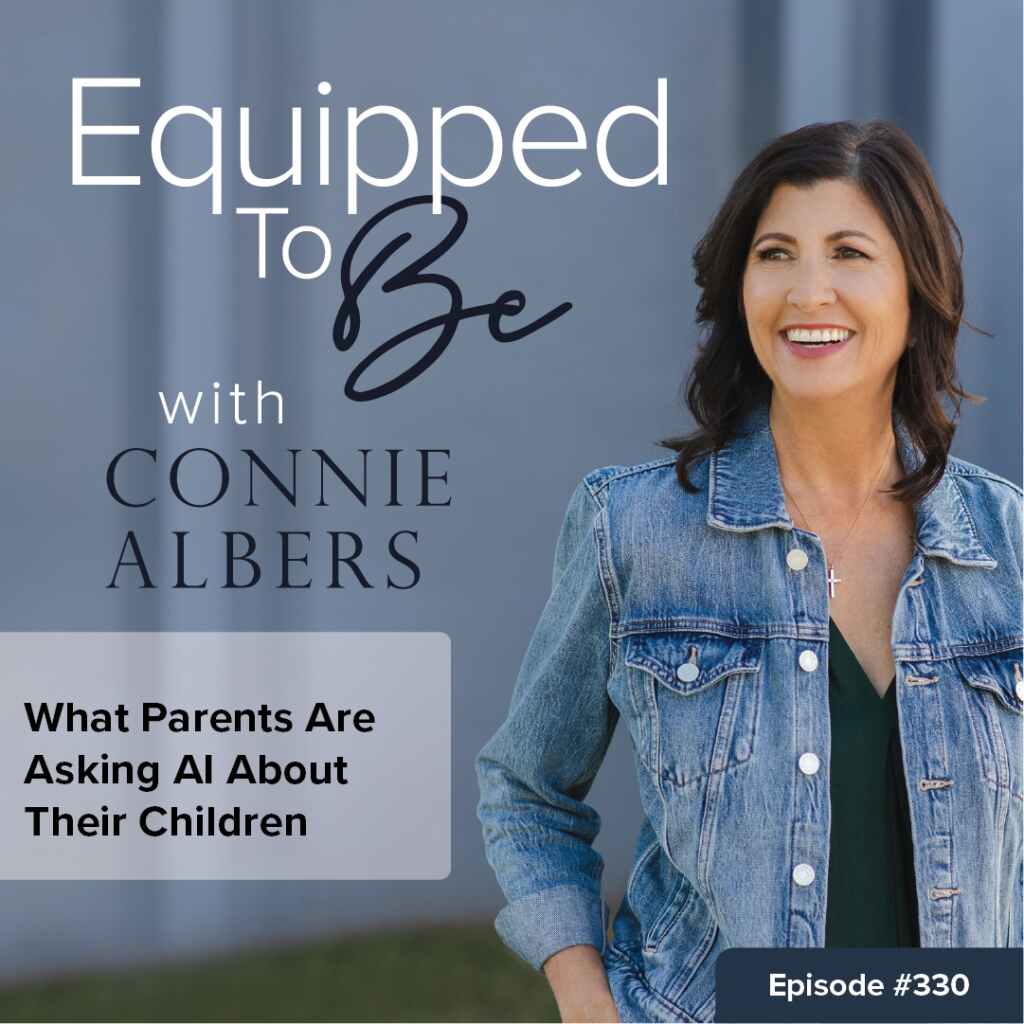
At first glance, those questions may seem unrelated, but many of them are asking the same thing underneath:
Am I doing this right?
That may be one of the most revealing things about parenting today.
Parents have access to more information than ever before. We can find research, expert opinions, parenting philosophies, podcasts, videos, social media advice, and now AI-generated answers almost instantly. In other words, we are not lacking information.
And yet, strangely enough, more information has not necessarily made parents more confident. In many cases, it has done the opposite.
Parents Have More Answers but Not Necessarily More Wisdom
One expert tells parents to hold the boundary. Another warns against being too controlling.
Parents are told to validate feelings, teach emotional regulation, establish consequences, preserve connection, encourage independence, protect mental health, limit screens, listen more, intervene less, and somehow know which principle matters most in a particular moment.
No wonder a parent eventually asks:
Can somebody just tell me what I’m supposed to do?
Artificial intelligence can feel especially appealing because it answers quickly and sounds personal. A parent can explain an entire situation and receive suggestions within seconds.
That can be useful.
AI can help us gather information, organize our thoughts, generate questions, and consider possibilities we may have overlooked.
But parenting has never simply been an information problem.
Parenting requires wisdom.
Wisdom asks more than, “What do parents usually do in this situation?”
It asks:
What is actually happening in the heart of my child?
Is there something happening behind this behavior?
Does my child need from me right now?
What am I trying to teach?
What kind of person am I trying to help this child become?
Those questions require more than information. They require relationship, attentiveness, discernment, and judgment.
Is My Child Okay?
One of the most common concerns underneath parenting questions is simple:
Is my child okay?
Parents wonder whether a behavior is normal, whether they should worry, whether their child is too emotional, too quiet, too immature, too anxious, too independent, or not independent enough.
Of course, parents should understand healthy development and pay attention when something genuinely concerns them.
But children do not develop according to perfectly predictable timelines.
They grow unevenly. They go through seasons. Their personalities differ. Their responses differ.
After raising five children, I learned early that what worked beautifully with one child might not work at all with another.
That is why one of a parent’s greatest assets is knowing the child in front of them.
Take time to know their patterns.
Pay attention to when their silence is normal and when something feels different.
You know when “I’m fine” really means, “I don’t want to talk,” and sometimes when it means, “Please don’t stop asking.”
AI can suggest possibilities.
It cannot replace attentiveness.
Am I Handling This Right?
Another question parents continually wrestle with is whether they responded correctly.
Should I give a consequence?
Should I let this go?
Was I too harsh?
Was I too permissive?
Should I have handled that conversation differently?
Here is something parents need permission to remember:
There is not always one perfectly correct parenting response.
Sometimes several reasonable responses could be wise.
Parenting is not a multiple-choice test where one perfect answer exists, and every other choice means you failed.
Yes, there are principles that matter. Children need boundaries, truth, responsibility, affection, correction, forgiveness, and leadership.
But how those principles are applied will sometimes depend on the child, the situation, their age, and what you are trying to accomplish.
And sometimes we will get it wrong.
Every parent does.
What matters next is repair.
You can tell your child:
“I was right to address what happened, but I was wrong in the way I spoke to you.”
An apology does not require abandoning a boundary.
In fact, admitting when we are wrong can teach children something important about mature relationships.
People make mistakes.
People take responsibility.
Relationships can survive conflict.
Forgiveness matters.
We can repair what we damage.
Do I Still Have Influence?
As children grow, another question becomes increasingly important:
Do I still have influence in my child’s life?
Influence and control are not the same thing.
Control can come from authority.
Influence grows through relationship, trust, credibility, and connection.
Eventually our children become too old for us to control every choice they make. That is supposed to happen.
The goal was never to stand beside them forever telling them what to do.
The goal is to prepare them to live wisely when we are not there.
That means our children need to believe:
“My parents will listen to me.”
“I can bring them difficult things.”
“They may disagree with me, but they want to understand me.”
This is where what I call the listening gap matters.
Sometimes parents think their children are no longer talking.
But often children have been talking. We may simply have become so quick to correct, instruct, warn, or solve that they stop bringing us the deeper things.
Listening does not mean abandoning truth or boundaries.
It means building enough relational access that our wisdom can still be heard.
Rules can control behavior for a season.
Relationship shapes the heart over time.
How Do I Protect My Child From a World Changing So Quickly?
This may be one of the defining parenting questions of our time.
How do I handle screens?
When should my child have a phone?
What about social media?
How should my child use AI?
How do I protect them from pornography, comparison, online manipulation, misinformation, and cultural influences I cannot always see?
Protection matters.
There are things children should not have access to. There are boundaries parents should enforce.
But protection cannot be our only strategy.
Eventually children will encounter the world we spent years trying to protect them from.
So our goal must also be preparation.
We cannot anticipate every situation our children will face.
But we can prepare them to think wisely when they encounter something we never saw coming.
Teach them to ask:
Is this true?
Is this good?
Who benefits if I believe this?
What is this doing to my thinking?
What is this doing to my relationships?
Who am I becoming?
Those are discernment questions.
And in a world of artificial intelligence, endless information, and rapid cultural change, discernment may become one of the most valuable things we teach our children.
Use AI for Input, Not as a Substitute for Discernment
I am not anti-AI.
I use it.
It can be an extremely useful tool.
Parents can use AI to find information, prepare questions for professionals, think through possible responses, or consider perspectives they may have missed.
But there is an important line we should not cross.
Use AI for input. Do not outsource discernment.
AI does not carry responsibility for your parenting decisions.
You do.
AI does not love your child. And it cannot pray for wisdom like you can.
It does not see your child’s expression across the kitchen table.
It does not know the full history of your family.
And it cannot decide what kind of person you are trying to raise.
For Christian parents, James 1:5 remains deeply relevant:
“If any of you lacks wisdom, let him ask God, who gives generously to all without reproach, and it will be given him.”
We live in a time when answers are increasingly easy to obtain.
Wisdom is still something deeper.
Maybe the Goal Is Not Knowing Everything
Parenting will repeatedly bring us to places where we do not know exactly what to do.
That does not mean we are failing.
Maybe the goal is not becoming the parent who always has the answer.
Maybe the goal is becoming the parent who knows how to think wisely when the answer is not obvious.
Know your child.
Know your values.
Pay attention.
Stay connected.
Ask good questions.
Seek wise counsel.
Repair when necessary.
Pray for wisdom.
And remember what you are ultimately trying to build.
We are not simply raising children who behave well while we are watching.
We are preparing future adults who can think, discern, take responsibility, love others, stand for what is true, and follow God when we are no longer standing beside them.
AI may be able to answer a parenting question.
But it cannot be the parent.
About, References, and Links
The following may contain affiliate links.
- Learn more about Parenting Beyond the Rules
Related Episodes
- Raising Children in a Changing Culture
- The AI Impact on Students
- Teach Belonging To Your Children
- Popular YouTube interviews that people are enjoying:
- Can Archaeology Confirm the Bible with Dinesh D'Souza
- The Mystery of the Altar of Pergamon with Jonathan Chan
- Episodes you might have missed:
- Who Is Teaching Your Son to Be a Man? with Seth Troutt
- Life's Unexpected Interruptions
- Letting Adult Children Go Without Losing Them


