The Beautiful Unseen Work of Motherhood is often made up of hidden moments that never get applause, recognition, or even a simple thank-you. Yet these small, unseen acts are some of the most powerful investments you will ever make in your child’s life.
You do the work in the quiet corners of your day: packing lunches, wiping counters, comforting tears, and most of it passes without anyone saying “thank you.” It can feel invisible, even unimportant at times, especially when exhaustion weighs heavily or the world seems to value what’s flashy and visible.
Yet the truth is this: the unseen acts of motherhood are some of the most powerful investments you will ever make in your child’s life. They may not trend online or show up in the family photo album, but they are etched into the hearts of your children. These simple, everyday choices are the threads that quietly weave a strong, beautiful legacy of love.
The Legacy of Motherhood
“The unseen work of motherhood may not be noticed by the world, but it is remembered by your children and rewarded by God.” — Connie Albers
Everyday Unseen Work that Speak Love
The everyday tasks of motherhood often seem unremarkable, but they carry deep meaning. Folding laundry late at night, packing lunches with favorite snacks, or cutting the crust off a sandwich might not feel significant in the moment. Still, these little details communicate something profound: “I see you. I care about you.”
Although no one else may notice, your child feels the steady rhythm of your care. These ordinary acts lay a foundation of security and love. And as we move from these practical tasks, we discover the quiet yet powerful emotional work that mothers also carry.
Emotional Labor That Builds Connection
Mothers often sense a child’s emotions before a word is spoken, stepping in to offer comfort or a gentle pause in the storm. Sitting silently with a child who is struggling, or choosing patience instead of frustration, creates trust in ways that words cannot. These unseen sacrifices build a safe place for our children’s hearts.
Every time you soften your tone or offer your presence instead of rushing past, you are showing your child that they matter more than your to-do list. These unseen emotional investments prepare you for the even deeper spiritual role you play as a mother.
Spiritual Seeds Planted in Secret
There’s nothing glamorous about sitting in a dark room rocking a crying baby at 2 a.m. Your eyes burn, your body aches, and you wonder if you’ll ever sleep again. But in that moment, your baby feels your heartbeat, your warmth, your presence. They don’t know it yet, but that unseen sacrifice is what teaches them: ‘I am loved. I am secure.’
The unseen prayers of a mother may be her most powerful work. Whispering prayers over a sleeping baby or kneeling at a teenager’s door at night may feel hidden, but those petitions rise to heaven and leave an eternal imprint. Scripture reminds us: “The prayer of a righteous person is powerful and effective” (James 5:16).
Even when no one else knows, God sees every whispered prayer and every weary act of faithfulness. These spiritual seeds grow into a legacy that your children carry with them for a lifetime. And as those seeds take root, they form ripples that extend far beyond your home.
Ripples That Reach Generations
The unseen work of motherhood shapes more than one moment; it creates ripples that last for generations. A child who feels loved because of small, consistent actions carries that assurance into adulthood. A home filled with grace and patience becomes the model upon which they build their own families.
Though the world may not notice, your children remember the love behind the meals, the hugs, and the whispered prayers. This ripple effect is why motherhood is not just a role; it is a high calling. And as we reflect on that calling, we remember the legacy that every unseen act builds.
The Legacy of a High Calling
When kids ask tough questions: “Why did this happen?” or “Could it happen to us?” It’s natural to want to give quick answers. But the most powerful Motherhood is not measured by spotless homes or picture-perfect days. It is measured by love, sacrifice, and faithfulness. Galatians 6:9 reminds us: “Let us not grow weary in doing good, for at the proper time we will reap a harvest if we do not give up.”
Every hidden act, whether folding socks, drying tears, or praying unseen prayers, is a seed planted in your child’s heart. And though it feels unseen today, one day you will see the harvest.
Final Thoughts: The Beautiful Unseen Work of Motherhood
So, precious mom, the unseen work you do every day matters. It matters to your child. It matters to your family. And it matters to God. Even when you feel invisible, your love is building a legacy that will outlast you. That is the beautiful, unseen work of motherhood.
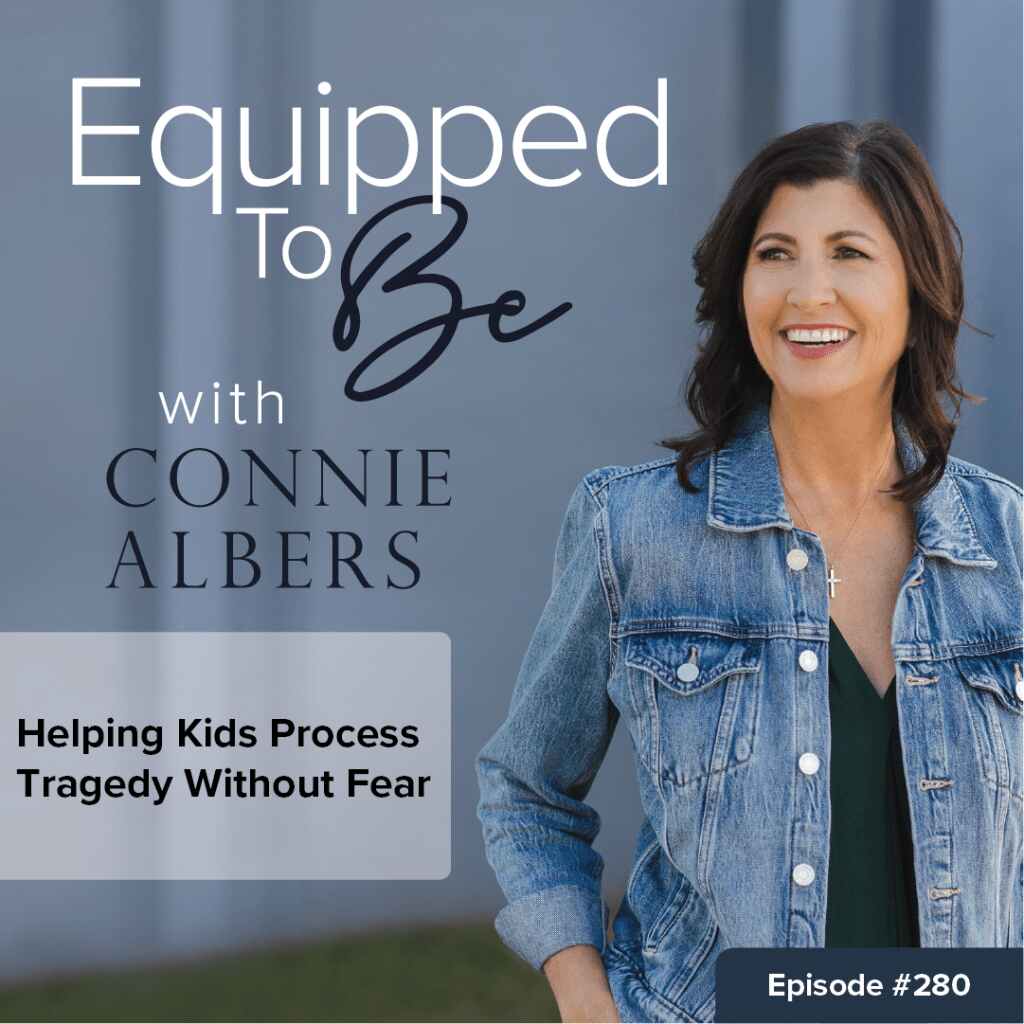
Helping Kids Process Tragedy Without Fear begins with parents showing up—not with perfect answers, but with steady presence, listening ears, and hope-filled hearts.
When tragedy strikes, like the recent shooting of Charlie Kirk just a day before the 9/11 anniversaries, parents are left wondering how to explain the world to their children. Do you share the truth? Do you protect them from the news? Or do you simply listen?
The truth is, your children don’t need perfect answers. Instead, they need your presence, your steadiness, and your hope. And the good news is—you can give them that, even in uncertain times.
How to talk to kids about tragedy
“Even in tragedy, you can raise children who are not consumed by fear but anchored in truth, wisdom, and love.” — Connie Albers
Why Parents Matter Right Now
Children are always listening. They hear the whispers, see the headlines, and notice the heaviness in our voices. Unlike when 9/11 happened, today’s kids are flooded with instant updates, opinions, and images on social media.
Because of that constant exposure, your role as a parent matters more than ever. You don’t need to interpret the entire world—you just need to help your child process their world. Your calm presence becomes the anchor they can cling to when everything feels uncertain.
Helping Children Feel Safe After a Tragedy
At the core of every child’s worry is one question: Am I safe?
Offer Reassurance Through Words and Routines
Simple words like “You’re safe here with me, and we’ll walk through this together” go a long way. Pair that with routines—like bedtime stories, prayer, or hugs—that remind your child they are secure.
Reduce Fear By Creating a Safe Haven at Home
Even if the world feels chaotic, your home can be a sanctuary. Shielding children from endless news loops or harsh online comments allows their hearts and minds to heal. And when you intentionally limit exposure to endless news loops or harsh online commentary, you are giving their hearts and minds room to heal.
Listening Without Rushing to Fix
When kids ask tough questions—“Why did this happen?” or “Could it happen to us?”—it’s natural to want to give quick answers. But the most powerful gift is your listening ear. But this is one of those moments where less is more.
Validate Their Feelings
You might say, “It makes sense that you feel sad or scared. I do too.” This simple acknowledgment creates a safe place for children to process emotions.
Without this balance, parenting feels incomplete. And as Ephesians 6:4 reminds us: “Do not exasperate your children; instead, bring them up in the training and instruction of the Lord.” That’s compassion and correction working together.
Show You Take Their Thoughts Seriously
Write down their questions together and promise to revisit them later. This tells your child their voice matters and that you will stay engaged in their concerns. By doing this, you’re showing your child that their voice matters and that they don’t have to carry fear alone.
Teaching Wisdom in Words
Tragedy often sparks heated opinions. Kids see this at school, hear it in conversations, and scroll past it online. That’s why now is the time to teach them how to use their words carefully and wisely.
Model Respectful Dialogue
Teach your children that words can heal or harm. Encourage them to say, “I see it differently, but I respect you.” When children learn to engage in respectful dialogue, they carry hope into divided spaces.
Practice Through Role-Play
Role-play responses with your kids so they’re prepared. If a peer says something cruel online, you can practice together how to respond with calm respect. This not only prepares them for the real world, but it also reduces their anxiety about navigating conflict.
The Social Media Factor
Unlike in 2001, when families gathered around the television, today’s kids carry the news in their pocket. Every swipe can flood them with unfiltered images and opinions.
Guide Children to Choose Wisely
Help your child understand algorithms and how platforms feed outrage to keep them engaged. Teach them they can choose what they consume and that stepping back is healthy.
Pause and Reflect Together
Scroll one post with your child and ask, “How does this make you feel? Is it helpful or harmful?” These conversations teach discernment and emotional awareness. These short conversations may seem small, but they go a long way in teaching discernment and emotional awareness.
Equipping Kids With Faith and Hope
As parents, our role is not just to ease fear—it’s to point our children toward hope. And hope doesn’t mean ignoring the pain; it means helping your kids see that there is always light in the darkness.
Anchor Them in Timeless Truths
Remind them: “God is with us. We can pray. We can be light in the darkness.” These truths steady children in uncertain times.
Create Rhythms of Gratitude
End the day with a “gratitude circle.” At dinner, invite each family member to share one good thing they noticed that day. Gratitude helps hearts heal and builds resilience. By focusing on gratitude, you’re not denying the hardship—you’re teaching your kids to see beyond it.
Final Thoughts
You don’t need to have all the answers or polished words. You simply need to be available. What matters most is that you show up.
When you reassure your child, listen deeply, guide them in wise speech, help them navigate social media, and point them toward faith, you are planting seeds of resilience.
Even in tragedy, you can raise children who are not consumed by fear but anchored in truth, wisdom, and love. And that is the legacy of hope we can leave our children. And that, dear parent, is how you leave a legacy of hope.
Gentle Parenting has captured the attention of moms and dads everywhere. The idea of raising children with empathy, calm conversations, and respect sounds like the answer we’ve all been looking for. But as more families try to put it into practice, the question arises: Is Gentle Parenting dissolving under the weight of real-life challenges, or is it evolving into something stronger?
Is Gentle Parenting Dissolving or Evolving? What are parents missing?
“Children don’t just need to be understood; they need to be guided. Gentle Parenting without structure leaves them adrift.” — Connie Albers
What Gentle Parenting Promises
Gentle Parenting emphasizes patience, respect, and emotional connection. Instead of yelling or punishing, parents are encouraged to stay calm, validate feelings, and guide their children with compassion. For weary moms who were raised under stricter, “because I said so” households, this approach can feel like a breath of fresh air. rld the way God sees it—through the lens of His Word.
But let’s be honest, real life with kids doesn’t always match the Instagram posts. I remember trying to talk one of my kids through a meltdown at the dinner table. I listened, I validated, I stayed calm. But the food was getting cold, everyone else was frustrated, and the situation wasn’t resolving. That moment was when I realized empathy alone wasn’t enough. My child also needed clear guidance.
When the ideal collides with the everyday, parents start wondering: is something missing?
Why Parents Are Pushing Back
Many moms and dads are realizing that being endlessly patient isn’t always possible—or even helpful. Parenting experts point out that children thrive when they have both compassion and clear limits. In fact, teachers often share that children who aren’t used to hearing “No” at home struggle when they enter classrooms that require structure and following instructions.
Gentle Parenting may meet emotional needs, but without boundaries, kids can become confused or even anxious. They don’t always know where the guardrails are. Scripture reminds us: “Discipline your children, and they will give you peace; they will bring you the delights you desire” (Proverbs 29:17).
This realization is leading families to ask a new question: how can we blend kindness with firmness?
Where Gentle Parenting Falls Short
The heart behind Gentle Parenting is beautiful, but it can leave parents feeling like failures. Why? Well, social media sets an unrealistic standard: never raise your voice, always stay calm, never use consequences. But that’s not what kids, or parents, truly need.
Children need the safety of knowing that Mom or Dad means what they say. They need to see that love and discipline aren’t opposites—they are partners. Even God models this for us: “The Lord disciplines the one he loves, and he chastens everyone he accepts as his son” (Hebrews 12:6).
Without this balance, parenting feels incomplete. And as Ephesians 6:4 reminds us: “Do not exasperate your children; instead, bring them up in the training and instruction of the Lord.” That’s compassion and correction working together.
Recognizing these gaps has inspired parents to adjust their approach instead of abandoning it altogether.
How Parents Are Adapting
Rather than abandoning Gentle Parenting, many families are combining its best aspects with tried-and-true practices. They are:
Leading with empathy: “I understand you’re upset.”
Following with structure: “…but it’s still bedtime.”
Here’s a simple 3-step framework that’s helping parents in everyday life:
Pause – Take a breath before reacting.
Acknowledge – Validate the child’s feelings.
Guide – Set a clear boundary with kindness.
This simple shift allows children to feel heard, while also learning that boundaries matter. Parents are also giving themselves grace to admit they won’t always get it right. That humility shows kids what real love looks like.
As more families try this balanced approach, a new version of Gentle Parenting is taking shape—one that’s both kind and strong.
Parenting Through Complex Conversations with Love and Truth
Every family faces tough cultural questions, and for some, those challenges come right to the dinner table.
Whether you’re navigating an interfaith marriage or a child wrestling with identity, these moments can feel overwhelming. But remember, God has not left you alone. When you lead with grace, listen before you lecture, and stay anchored in truth, you show your children what it looks like to live like Jesus.
And that’s the heart of equipping our kids with a biblical worldview: giving them the tools, the grace, and the truth to walk faithfully in a confusing world.
Wrapping It Up
So, is Gentle Parenting dissolving or evolving? The answer is both. The rigid “never correct, always validate” model is dissolving, while a healthier, more biblical version is evolving. This model allows children to feel deeply loved while also being guided by consistent boundaries.
When we choose to parent with both compassion and structure, we give our children the gift of security. They know they are loved, and they also know we’ll hold them accountable. That combination helps raise confident, respectful, and resilient kids who are ready to face the world.
Take a moment to reflect: Does your parenting lean more toward compassion or structure? How might adding the other bring greater balance to your home?
Parenting Boys in a Confused Culture is possible when we focus on Biblical principles.
How can we raise boys to become godly men in a culture that no longer honors biblical masculinity? That question weighs heavily on many parents’ hearts; mine included.
As a mom of three boys and grandmother to three boys, I’ve seen firsthand how critical this calling is. Boys today are growing up in a world that often mocks manhood, undermines virtue, and erodes moral foundations.
That’s why I invited Mark Hancock, CEO of Trail Life USA, to speak with me about what it takes to raise boys into men of character, conviction, and courage. Whether you’re a parent, grandparent, mentor, coach, or ministry leader, this message is for you.
With that in mind, Mark and I outline biblical principles and practical steps to guide boys into maturity, raising not just good boys, but godly men.
The Crisis Facing Boys Today
Let’s begin by acknowledging the reality: boys today are struggling. Many are retreating into virtual spaces: video games, social media, and online platforms in search of adventure, achievement, and identity. While these digital worlds offer escape, they often rob boys of the real-world skills and relationships they need to thrive.
Too many boys are retreating into digital worlds—video games, online forums, social media—in search of success, power, and purpose. The result? A generation that’s disengaged from real-world challenges. Apathy and rebellion are often symptoms of an unmet longing for adventure, meaning, and a sense of purpose.
As a result, we must call our boys into something higher. They don’t need to be managed; they need to be mentored. And most of all, they need to be discipled.
God’s Design for Boys Becoming Men
Before we dive into the practical steps, it’s important to remember this: God designed boys to grow into men, not just physically, but spiritually and emotionally. And that formation begins at home.
Boys need to see, hear, and experience what it means to walk with God. It starts with us modeling it. They’re watching how we handle pressure, how we treat others, and whether we live what we preach. That’s why we must:
Live with integrity even when no one’s watching
Take responsibility for our mistakes
Pursue God in prayer, Scripture, and service
Our example speaks louder than any lecture. Our character becomes the blueprint they’ll follow. So if we want to raise godly men, we must first become godly models. Let them see what it means to be a man under God’s authority.
Principle One — Lead by Example
First and foremost, boys learn by watching. If we model honesty, integrity, and humility, they’ll learn to walk in those same truths. If we take responsibility for our actions and own our mistakes, they will see that strength includes vulnerability.
Boys don’t need perfect parents; they need real ones. When we admit fault, ask for forgiveness, and stay faithful, we teach them more than words ever could.
Here are some simple but powerful ways to model this daily:
Apologize sincerely
Speak truth kindly
Pray dependently
Serve faithfully
That’s why it’s essential to remember that a boy learns how to be a man not by lectures but by legacy. Whether you’re a mom, dad, or mentor, your faithfulness is shaping the future of a man.
Once we lay that foundation through our actions, we can begin building trust through our words.
Principle Two — Foster Honest Communication
Next, our boys need to know they can talk to us and be heard without fear or shame. Open communication is the bridge to their heart.
In a noisy world, our boys need space to process their thoughts and emotions. Ask questions. Listen well. Be slow to lecture and quick to connect. When they know they can talk to you, they’ll come to you, even when the stakes are high.
Use conversations to explore:
What truth means
What integrity looks like
What Scripture says about identity and leadership
When a boy feels heard, he’s more likely to internalize what matters most—your values.
Principle Three — Establish Clear Values
Boys thrive when they know where the boundaries are and why they’re there. Set biblical values as your family standard. Talk openly about culture’s confusion and God’s clarity. Teach discernment by walking through media messages and peer pressures together.
Take time to talk about things like:
Honoring others with words
Telling the truth, even when it’s hard
Treating women with respect
Serving others without expecting applause
Then, as culture’s messages come flooding in, help your son compare them to God’s truth. This practice doesn’t shelter him; it strengthens him.
Of course, these lessons are magnified when taught by more than just one voice.
Help your son measure everything against the truth of God’s Word. Not only will this guide his decisions, but it will strengthen his faith.
Principle Four — Provide Godly Male Role Models
While moms play a powerful role, boys also need men to look up to. If Dad is active and involved, that’s a gift. But if not, don’t lose hope—God can still provide.
Whether it’s a father, grandfather, coach, or youth leader, boys need men in their lives who show them what godly manhood looks like. If Dad isn’t present, pray for and pursue trustworthy male mentors who can come alongside you.
Their presence speaks to a boy’s value. Their guidance shapes how he sees himself and his future.
Remember, boys learn best from being with men who love God.
As we surround them with guidance, we must also strengthen them from within.
Principle Five — Build Resilience and Purpose
Boys will face disappointment, failure, and hardship. But instead of protecting them from every challenge, we must prepare them to grow through it.
Godly men don’t avoid hard things; they persevere through them. Start by teaching boys to set and pursue goals with perseverance. Break big goals into smaller steps. Celebrate progress. And most importantly, remind them that their worth isn’t in success, it’s in being faithful.
To build resilience and a sense of purpose, you can encourage :
A growth mindset: “I can learn from this.”
Biblical coping strategies: prayer, wise counsel, and worship
Reflection: What did I learn? Where did I grow?
Help your son see that even setbacks are part of God’s refining process.
In moments of struggle, our boys also need to know who they are—and whose they are.
Principle Six — Speak Life and Encouragement
Every boy carries an invisible question: “Do I have what it takes?” Your words help answer that.
Boys need encouragement that speaks to their identity in Christ, not just their performance. Affirm their character. Praise their effort. Speak truth to young boys who are becoming men.
A simple “I see God working in you” goes further than we think. Our words water the seeds of godly manhood.
When they know their identity is anchored in Christ, they won’t need to chase the world’s approval.
Final Thoughts — A Call to Courageous Parenting
Raising boys to become godly men isn’t easy, but it is possible. It takes prayer, purpose, and patience. And most of all, it takes parents with clarity, courage, and conviction to rise above the cultural noise and lead with faith. The world may question manhood, but God defines it.
The world may question manhood, but God never has. His Word is clear, his design is good, and his grace is sufficient.
Let’s raise boys who are strong in spirit, tender in heart, firm in truth, and faithful in the little things. Let’s raise men who reflect Christ.
So take heart, Mom and Dad. You’re not alone. God chose you for this boy, at this time, for His purposes. And that makes all the difference.
Bios, Sponsors, Related Shows, and Links
Mark T. Hancock began his career by founding an advertising agency that grew to national prominence over the course of fifteen years. His conversion to Christ led him into ministry as a Youth and College Pastor, Associate Pastor, Homeless Ministry Director, and Global Event Director for an international ministry, organizing events on five continents.
An award-winning author, writer, and conference speaker, he serves as the Chief Executive Officer of Trail Life USA and resides near Greenville, SC, with his wife of over 30 years. They have two sons.
Overscheduled Kids? How to Balance Extracurricular Activities and Free Play is a question more parents are asking as childhood calendars fill up faster than ever.
In the race to provide every opportunity, from music lessons to competitive sports, we often overlook the quiet warning signs: tired eyes, anxious hearts, and lost joy. While enrichment activities can be wonderful, too much of a good thing can crowd out the space kids need to rest, play, and simply be.
In this episode, I’ll explain how to spot the signs of overscheduling, why free play matters more than we think, and practical ways to create a healthier, happier rhythm for your family.
The Modern Childhood Calendar: Full or Fulfilling?
It starts the same way for so many of us: you’re looking at your planner, thumbing through text reminders—piano at 3:30, soccer at 4:15, math tutor by 6—and you catch your child’s eyes looking at you. They look exhausted, not exhilarated. Why? Because the race to give our kids every opportunity can quietly squeeze out the very childhood we’re trying to enrich.
Pediatric experts have been sounding the alarm. A 2024 review found that children who log extra activities “hour after hour” show higher rates of anxiety, depression, and even anger than their less-scheduled peers solutionhealth.org. Dr. Deb Lonzer, a Cleveland Clinic pediatrician, puts it plainly: “Kids whose time is overly organized don’t have time to be kids, and their family doesn’t have time to be a family”
Translation? A bursting calendar isn’t automatically a fulfilling one; the magic is in the margin.
Signs Your Child Might Be Overscheduled
Mood swings & irritability – abrupt tears after practice or a hair-trigger temper at home.
Sleep troubles – trouble falling asleep or waking up tired despite a full night.
Loss of joy – once-beloved sports or clubs feel like chores.
Foggy focus – slipping grades or blank stares during homework time.
Physical complaints – frequent headaches or stomachaches with no apparent medical cause.
Mary Catherine, a pediatric nurse practitioner known as @the.mom.np, warns that children who rarely get downtime “may develop unexplained physical symptoms and rising anxiety,” nypost.com. When these red flags cluster, your child’s calendar—and nervous system—may be begging for breathing room.
How Much Is Too Much?
Let’s take a realistic Look at 2–3 Activities. Whether two or three activities are “too many” depends on:
Guiding Questions for Parents
Why It Matters
How much homework does my child average each night?
Academic load + rehearsals may crowd out sleep.
Does my child’s personality recharge alone or with people?
Introverts need more unscripted solitude.
Is at least one afternoon per week completely free?
Brains and bodies recover in empty space.
Does my child ask for this activity or merely tolerate it?
Are meals, faith gatherings, and family nights suffering?
When core relationships slip, the schedule needs trimming.
Keep evaluating each season: a heavier fall sports schedule might mean a lighter winter with more cozy family nights and outdoor play.
Why Free Play Matters More Than We Think
Play isn’t a frivolous break from “real” learning; it is real learning. The American Academy of Pediatrics describes play as “a powerful, brain-building activity that buffers toxic stress and builds executive function,” according to publications.aap.org. Harvard’s Center on the Developing Child notes that unstructured games enhance working memory, creativity, and self-control, skills that children will rely on throughout their lives. gse.harvard.edu.
Picture a backyard stick-sword turned spaceship: in ten minutes, your child has solved problems, negotiated rules with siblings, managed frustration, and, bonus, had fun. No adult-crafted curriculum required.
Building a Balanced Schedule
The “One-At-A-Time” Rule: Pediatric nurse practitioner Mary Catherine limits her own kids to one extracurricular per season and sees calmer, happier children because of it nypost.com. Try choosing a single focus each term (e.g., spring soccer, summer swim).
Time-Block Rest: Put “nothing” on the calendar. Literally block out unscheduled afternoons so chores, Lego builds, or cloud-watching can unfold without hurry.
Family Check-Ins: Over weekend breakfast, ask: “Which activity lit you up this week? Which one drained you?” Let kids’ answers guide next season’s sign-ups.
Protect Evenings: Aim for four shared meals at home each week. Research shows that family dinners are correlated with better mental health and academic performance; they’re worth protecting.
Model the Margin: When parents book every minute of their own lives, children copy the cadence. Show them how to say no—and how to savor a quiet walk or a board game.
Final Thought on Overscheduling Kids
Your child’s schedule should feel like well-paced music, moments of lively crescendo, followed by calm, restorative rests. When you strike that rhythm, you give them more than resume fodder; you give them space to discover who they are. And that, more than any trophy or recital, is the opportunity that matters most.
The sudden rise in parents seeking parenting advice makes some experts ask: Is AI the New Parenting Expert?
Would you ever trust a chatbot to help raise your kids? According to new statistics, 71% of parents are utilizing AI tools to aid in parenting decisions. The trend of AI in parenting is rising fast. Today, I will unpack: the benefits, the concerns, and what parents need to know. And research-backed truths about using AI tools.
While I am not recommending or endorsing the use of AI for parenting advice, I believe it can be helpful if used wisely.
Why Parents Are Turning to AI for Parenting Help
In today’s fast-paced, always-on world, more parents are turning to AI tools like ChatGPT to help lighten the mental load of parenting, and the reasons go far beyond mere convenience. With families juggling more responsibilities than ever, it’s no surprise they’re looking for quick, smart support.
The Rise of AI in Daily Family Life
In recent years, the rise of AI in daily family life has reshaped how parents manage their homes, routines, and relationships. Tools like ChatGPT, Alexa, and a growing number of parenting apps are stepping in as digital helpers, offering everything from meal ideas to discipline strategies at the tap of a screen.
For many families, these platforms are filling what some call the “mom gap,” easing the mental load by helping with decision-making and planning. Moreover, the appeal lies in their 24/7 accessibility and judgment-free nature. It’s a place parents can ask tough questions without fear of criticism or shame.
As AI becomes increasingly embedded in everyday parenting, it’s tempting to wonder: Are we looking at a new kind of parenting expert?
The Convenience of Instant Advice
Another reason AI is becoming a go-to parenting resource is its ability to provide instant, customized answers. Whether a mom needs a quick meal plan, a dad wants a screen time contract, or a caregiver seeks gentle discipline phrases, tools like ChatGPT respond immediately, with no wait time, appointments, or guilt. In the chaos of family life, that kind of speed feels like a gift.
Furthermore, AI tools often adapt to your preferred parenting style, offering Montessori-based ideas, positive parenting techniques, or faith-based reminders. It’s no wonder so many are wondering if AI is the new parenting expert; it meets stressed-out parents right where they are.
However, while the draw of digital parenting support is strong, it’s worth asking: can AI actually understand the essence of parenting?
What AI Gets Right About Parenting
Despite its limitations, AI has carved out a surprisingly helpful role in modern households, offering support in areas where parents often feel overwhelmed or stretched thin: meal planning, budgeting, and organizing are just a few of the ways moms find AI tools helpful.
Reducing Decision Fatigue
One of the most praised uses of AI in parenting is its ability to reduce decision fatigue. Instead of overthinking every detail—from what to pack in lunchboxes to how to respond to a tantrum—parents can offload those repetitive, low-stakes decisions to AI. This frees up precious mental energy for the moments that matter most: connection, listening, and guiding with intention.
As AI tools become more intuitive, they provide just enough structure to make parenting feel more manageable without taking over. For parents juggling the emotional weight of raising children, this small but consistent relief can feel like a lifeline.
Enhancing Learning and Connection
AI isn’t just offering practical help; it can also enhance learning and connection in family life. Apps and bots are being used to prompt emotional intelligence exercises, spark meaningful dinner table conversations, and even generate custom bedtime stories based on your child’s interests. While it’s not a replacement for prayer, scripture, and human interaction, when used with discernment, AI can create moments of engagement that deepen parent-child bonds.
Some families report that these tools offer a fresh way to connect and gain a deeper understanding of their children, especially when navigating new developmental stages or addressing unique needs. In this way, AI may not be the parenting expert, but it’s becoming a supportive sidekick in the learning journey.
The Risks of Relying Too Much on AI
While AI promises convenience and calm, the truth is that over-relying on these tools can lead to unintended consequences that impact both parents and children. There’s a caution: just because it’s helpful doesn’t mean it’s harmless.
Misinformation and Inaccuracy
However, while AI can feel like a trustworthy shortcut, it’s not always accurate, and that’s where things can get concerning.
AI tools like ChatGPT are trained on vast amounts of online content, but they don’t always filter out outdated, biased, or even dangerous information.
In parenting, where nuance matters and every child is different, one-size-fits-all responses can lead to poor decisions. There have even been documented cases where AI provided inappropriate or unsafe suggestions. This raises a critical question for parents: Can we truly call AI a parenting expert when it doesn’t always get the facts or context right?
Emotional Disconnection & Dependency
In addition to concerns about accuracy, there is a growing worry about emotional disconnection. As families increasingly rely on AI to solve problems or provide support, the subtle risk is that it replaces meaningful conversations with convenience. Children, especially teens, may start turning to bots instead of their parents for answers, missing the warmth, empathy, and guidance only a real relationship can provide.
Furthermore, parents themselves may begin to depend on AI not just for help, but also for emotional regulation, decision reassurance, or companionship. Over time, this dependence can quietly erode the essential connection between parent and child, a bond that no chatbot can replicate.
Data Privacy and Safety Concerns
Equally important is the issue of privacy, especially when AI tools are used by or around children. Many parenting apps and devices collect sensitive information, from voice recordings to behavioral data. Without strong protections, that data could be used in ways parents never intended, such as for targeted advertising or third-party analysis. Children may also interact with AI in ways that feel harmless but reveal personal information. Since kids often don’t understand boundaries around data, the responsibility falls on parents to ensure the tools they use prioritize safety. And that means being as intentional about choosing AI tools as you are about who cares for your child in real life.
Knowing these risks, it’s essential to weigh both sides and consider what researchers and child development experts honestly think about AI’s role in parenting.
What the Experts Say: AI Should Support, Not Replace, Parents God Given Discernment
With all this in mind, the best approach is to treat AI as a co-pilot in your parenting journey, not the driver. That means using AI to brainstorm meal plans or bedtime stories, but not to diagnose behavior issues or replace your instincts. When AI becomes a helpful assistant rather than a substitute decision-maker, you stay in control of the values and tone that guide your home. Ultimately, AI works best when it supports God’s Word, your voice, not when it speaks louder than you.
The Importance of Godly Wisdom, Mentors, and Parental Intuition
While technology may offer quick answers, true parenting wisdom often comes from slower, more sacred sources. Godly counsel, trusted mentors, and parental intuition play a powerful role. No algorithm can replace the discernment that comes from seeking the Lord in prayer. Or the insight gained from someone who’s walked this road before.
Wise parenting isn’t just about solving problems; it’s about shaping hearts. And shaping hearts takes time, trust, and presence. That requires more than code. It calls for character, conviction, and the quiet confidence that grows when a parent is led by faith. As helpful as AI tools may be, they must never drown out the still, small voice that says, “You were chosen to raise this child.”
You are the primary influence in your child’s life; don’t allow that high position to be replaced by AI.
How to Use AI Tools Wisely in Parenting
Instead of avoiding AI altogether or surrendering to it completely, parents can adopt a balanced and thoughtful approach that utilizes technology as a tool, rather than a threat.
Treat AI as a Co-Pilot, Not the Driver
With all this in mind, the best approach is to treat AI as a co-pilot in your parenting journey, not the driver. That means using AI to brainstorm meal plans or bedtime stories, but not to diagnose behavior issues or replace your instincts. When AI becomes a helpful assistant rather than a substitute decision-maker, you stay in control of the values and tone that guide your home. Ultimately, AI works best when it supports your voice, not when it speaks louder than you.
Keep the Parent-Child Relationship Front and Center
Finally, even as you integrate technology into family life, it’s vital to keep your connection with your child at the center. Use AI to enhance, not replace, the conversations, eye contact, and bonding that only a parent can provide. Whether it’s using a story generator to start a bedtime tradition or a chatbot to model conflict resolution, the goal isn’t to step back, but to lean in with more confidence and calm. In the end, parenting isn’t about having all the answers, but about being present, and no matter how advanced AI becomes, presence is something it can never replicate.
You are the primary influence in your child’s life; don’t allow that high position to be replaced by AI.
Summary: Is AI the New Parenting Expert?
Is AI the new parenting expert? No, it’s a new tool. With discernment, it can help parents. Without knowing how to use it wisely, it may confuse, mislead, or disconnect families from each other.
By using AI with discernment and intentionality, we don’t just protect our children, we strengthen our role as the irreplaceable, trusted guide in their lives.
What role do you want AI to play in your home, and what role will only you, as the parent, fulfill?