Today, marriage can feel complicated. People often ask, “Why get married when relationships are already hard enough?” Maybe you’ve wondered this yourself. After all, the media frequently highlights the struggles, the breakups, and the heartache, which can make marriage seem daunting or even outdated. Yet, research consistently reveals that married people report higher levels of happiness, health, and life satisfaction compared to singles. So, if marriage holds such promise, why aren’t more people rushing to say “I do”?
In her insightful book Making Marriage Easier, Arlene Pellicane addresses precisely this issue, offering practical, faith-based strategies that transform marriage from daunting to delightful. Let’s unpack a few key insights on why marriage is still worth pursuing—and how to make it genuinely easier and joyful.
In this episode, Arlene joins me to discuss four ways you can love (and like) being married.
“Marriage isn’t just about duty—it’s about delight!” ~Arlene Pellicane
Love Is a Daily Decision, Not Just a Feeling
Many couples assume that love should always come naturally, but Pellicane points out that love is more about making daily decisions than experiencing fleeting emotions.
In our culture, we often mistake love for the butterflies we feel at the beginning of a relationship. When those butterflies fade—and inevitably they do—we assume something’s wrong. But Making Marriage Easier emphasizes love as a daily choice, grounded in intentional acts of kindness, patience, and grace. Choosing to love actively, rather than passively waiting for feelings to surface, is foundational to lasting happiness in marriage.
So, how does this daily choice practically play out in everyday life?
Serving Your Spouse Brings Joy
Shifting from a mindset of “What’s in it for me?” to “How can I serve my spouse?” radically transforms the dynamics of your relationship.
We live in a culture that’s constantly telling us to prioritize our own happiness. But ironically, one of the greatest predictors of marital happiness, as Pellicane beautifully explains, is the ability to serve your spouse selflessly. This isn’t about losing yourself; rather, it’s about discovering joy through giving. When both partners embrace this mutual service mindset, joy naturally follows. Serving your spouse wholeheartedly becomes a powerful source of personal fulfillment.
Awareness of these influences enables you to have honest and open conversations with your children about what they are experiencing and how it may impact their faith. By maintaining a safe, non-judgmental environment for dialogue, you help them process their thoughts with biblical guidance.
Taking Fun Seriously Strengthens Your Bond
Pellicane encourages couples to actively prioritize joy and laughter actively, as having fun together is a key to maintaining emotional intimacy.
Marriage can quickly feel weighed down by responsibilities: work demands, bills, raising children, and caring for aging parents. In the process, fun can slip off the priority list entirely. Pellicane argues that taking fun seriously isn’t just nice, it’s necessary. Shared experiences of laughter and adventure revive your bond, reduce stress, and boost your happiness. Having fun reminds you of why you fell in love in the first place and keeps your friendship strong.
But what happens when the kids grow up and life drastically changes?
Marriage Can and Should Last Beyond Parenthood
Making Marriage Easier highlights the importance of nurturing your marriage beyond the demanding years of parenting.
It’s easy to become so invested in your role as parents that your identity as a couple fades away. But marriage isn’t just about raising children together; it’s about creating a partnership that continues to flourish long after your kids leave home. Pellicane emphasizes intentionally connecting as spouses through regular date nights, meaningful conversations, and shared goals, ensuring your relationship endures well into the empty nest years and beyond.
Ultimately, a marriage built intentionally with daily choices of love, selfless service, shared joy, and lasting companionship sets you on the path to deep, sustained happiness.
Closing: Making Your Marriage Easier is Possible
Choosing marriage might seem countercultural today, but the research remains clear: married people are consistently happier, healthier, and more fulfilled. While marriage requires effort, it’s also immensely rewarding, especially when you incorporate these practical insights from Making Marriage Easier. So if you’re wondering whether marriage is still worthwhile, remember—it truly can be easier and more joyful than you imagine.
Marriage may not always be simple, but it doesn’t have to be complicated. With intentional decisions each day, you really can make marriage easier and discover the lasting happiness you’ve always desired.
Guest Bio, Sponsors, and Links
ARLENE PELLICANE is a speaker, host of the Happy Home podcast, and author of several books, including Parents Rising, Making Marriage Easier, and Screen Kids (coauthored with Dr. Gary Chapman). She is the spokesperson for National Marriage Week and has been happily married to her husband, James, for more than 25 years.
Want a Bible curriculum that strengthens your teen’s faith and critical thinking? RVL Discipleship: The Curriculum equips homeschool students to engage deeply with Scripture and live out God’s mission. This course, taught by Ray Vander Laan, brings biblical history to life, helping teens see their place in God’s kingdom. Try two free lessons today!
In RVL Discipleship: The Study, join renowned teacher and Bible scholar Ray Vander Laan as he examines what it means to follow Christ through the cultural, historical, and otherwise contextual lens of Scripture. The Study is a four-season video Bible study designed for small groups and individuals to explore the question: What did it mean to be one of the original disciples of Jesus, and what does that significance hold for us today?
Downloadable leader guides
Downloadable participant guides
Access all 4 seasons – 39 episodes that are 10-12 minutes long
Raising Godly Kids is a desire for many Christian parents. But what should you do if your children’s faith path drifts? You may have done your best to teach biblical values, live out your faith authentically, and create a home centered on Christ. Yet, despite your best efforts, you may find that some of your children embrace their faith while others seem to walk away. This can be confusing and heartbreaking. Understanding why this happens can offer encouragement, perspective, and hope. Let’s look at some biblical reasons why children from the same home may follow different spiritual paths and how you can respond in faith.
Today, I share how to face this challenging question: How to Raise Godly Kids When Faith Paths Drift. Why do some children from the same home follow God while others do not? You are not alone in this struggle, and I will unpack what Scripture says, what practical insights we can glean, and most importantly, how you can keep hope alive.
“Raising godly children isn’t about perfect outcomes—it’s about faithfully planting seeds of truth and trusting God to grow them, even when your child’s faith path drifts in a direction you didn’t expect.” Connie Albers
Individual Free Will: A Matter of Personal Choice
One of the most significant reasons children from the same home may choose different paths is their free will. The Bible clearly teaches that each person must make their own choice regarding faith. In Joshua 24:15, Joshua declares, “Choose for yourselves this day whom you will serve.”
Even in the most faith-filled homes, each child has a personal responsibility to choose whether to follow God or not. This concept is powerfully illustrated through the story of Cain and Abel (Genesis 4). Although they grew up under the same parenting, Cain chose a path of jealousy and violence while Abel chose to honor God.
It’s important to remember that no parent can control their child’s heart or decisions. While you can model faith, pray, and guide, each child will ultimately make their own choices. Accepting this truth allows you to continue loving your children unconditionally, regardless of their spiritual journey.
The Condition of the Heart: Different Responses to the Same Truth
Another crucial factor to consider is the condition of your child’s heart. In the Parable of the Sower (Matthew 13:1-23), Jesus describes how the same seed (the Word of God) falls on different types of soil (hearts), producing different outcomes. Some seeds grow and flourish, while others are choked out or wither away.
Similarly, siblings raised in the same Christian environment may have hearts that respond differently to biblical teachings. One child may eagerly accept God’s truth, while another may resist or struggle to believe. This difference does not necessarily reflect poor parenting; rather, it reveals each child’s unique spiritual condition.
Understanding that heart readiness varies helps reduce parental guilt and reminds you to pray specifically for God to soften the hearts of your children who may be struggling.
Personality and Temperament: Uniquely Wired for Faith
As you consider why children from the same home follow different spiritual paths, it’s to acknowledge their unique personalities. Psalm 139:14 reminds us that each person is “fearfully and wonderfully made.” While one child might naturally lean towards spirituality, another may be more analytical or even skeptical.
Take, for example, the biblical twins Esau and Jacob (Genesis 25:27). Though raised in the same environment, Esau was impulsive and focused on the present, while Jacob was more thoughtful. Their distinct temperaments influenced their choices, including their relationship with God.
Recognizing personality differences helps you understand why one child might be drawn to worship and prayer while another questions and challenges. Rather than feeling discouraged, view these differences as opportunities to approach faith discussions in ways that resonate with each child’s unique wiring.
External Influences: The Power of Peers and Culture
In addition to personality differences, external influences also shape your children’s faith. The Bible warns in 1 Corinthians 15:33, “Do not be misled: ‘Bad company corrupts good character.’” As much as you may protect your children from negative influences, friends, mentors, media, and life experiences still impact their beliefs.
For instance, a child who grows up in a godly home may still be influenced by secular ideologies at school or through friendships. This can lead to spiritual struggles, doubts, or even rebellion. We are all influenced by our surroundings, so parents must pay attention to who their children spend time with.
Awareness of these influences allows you to have honest, open conversations with your children about what they are experiencing and how it may impact their faith. By maintaining a safe, non-judgmental environment for dialogue, you help them process their thoughts with biblical guidance.
Fighting for Your Child’s Faith
Sometimes, despite a parent’s best efforts, spiritual warfare plays a role. The Bible reminds us that we battle not against flesh and blood but against spiritual forces (Ephesians 6:12). This unseen struggle can profoundly affect your child’s faith journey.
One sibling may feel spiritually attacked in ways that others do not, leading to doubts or a desire to pull away from God. A child’s unique vulnerabilities may make them more susceptible to these spiritual battles. Trust me, this is extremely difficult for a parent because we want our children to be strong and able to withstand attacks and temptations.
As a parent, prayer is your greatest tool to fight spiritual warfare, asking God to protect your children’s minds and hearts. Equip them with spiritual armor (Ephesians 6:10-18) and teach them to stand firm against spiritual attacks.
Trusting God’s Plan Your Child Drifts
While parental guidance is significant, each child’s faith journey is ultimately part of God’s sovereign plan. Romans 9:15 says, “I will have mercy on whom I have mercy, and I will have compassion on whom I have compassion.” This means some children may take a different path despite your best efforts.
Think of the Prodigal Son (Luke 15:11-32). Although the same loving father raised both sons, one chose to leave and live recklessly. Yet, the father’s unwavering love remained constant, and when the son returned, he was embraced with open arms.
Trusting God’s sovereignty helps you release the burden of controlling outcomes and instead focus on loving your children through their journey, regardless of where they are spiritually.
What Can You Do as a Parent?
Pray Without Ceasing (1 Thessalonians 5:17): Never underestimate the power of persistent prayer. Ask God to work in your child’s heart, especially when they are resistant.
Model Faith Authentically (Deuteronomy 6:6-7): Live out your faith daily, showing your children the practical and relational aspects of following Christ.
Love Unconditionally (Luke 15:20): Whether they are walking with the Lord or not, show them that your love remains steadfast.
Trust God’s Timing (Isaiah 55:8-9): God’s ways are higher than ours. Be patient and hopeful as you wait for His work in your child’s life.
Even though we can’t control our children’s choices, we’re not powerless—there are still meaningful, faith-filled ways we can parent with purpose and hope.
Closing: Hold On to Hope
Seeing your children take different spiritual paths can be both confusing and painful. However, understanding that each child has free will, unique personality traits, and various external influences can bring some clarity. Remember that God is at work even when it seems like nothing is happening. Your role is to model faith, pray fervently, and trust God with the outcome.
Continue to love your children where they are, keep the door open, and never give up hope. God’s grace can reach even the most distant hearts, and He specializes in bringing prodigals home.
If this episode encouraged you, share it with a friend who needs to hear these words today. And remember, you are doing a great job, even when the results aren’t what you hoped for. God sees your faithfulness, and He cares deeply for your children.
Sponsors, Related Shows, and Links
Want a Bible curriculum that strengthens your teen’s faith and critical thinking? RVL Discipleship: The Curriculum equips homeschool students to engage deeply with Scripture and live out God’s mission. This course, taught by Ray Vander Laan, brings biblical history to life, helping teens see their place in God’s kingdom. Try two free lessons today!
In RVL Discipleship: The Study, join renowned teacher and Bible scholar Ray Vander Laan as he examines what it means to follow Christ through the cultural, historical, and otherwise contextual lens of Scripture. The Study is a four-season video Bible study for small groups and individuals to consider the question: What did it mean to be one of the original disciples of Jesus, and what does that mean for us today?
Downloadable leader guides
Downloadable participant guides
Access all 4 seasons – 39 episodes that are 10-12 minutes long
Navigating Parenting Advice and Trends is best achieved not by using Google or AI, but by looking through the lens of God’s Word.
Have you ever searched for one piece of parenting advice and found yourself spiraling down a rabbit hole of conflicting voices, perfect images, and trendy tactics? You’re not alone. In a world overflowing with how-to guides, social media influencers, and unsolicited advice, knowing what’s right for your child—and your family—can feel overwhelming.
How do we know which voices to trust, especially when everyone seems to have an opinion? And what do we do when the advice we follow… doesn’t work?
“Your family is unique. Let God write your parenting story, not the internet.” – Connie Albers
How To Navigate Parenting Advice Through Biblical Wisdom
Seek God Not Google In Your Parenting
Before we open our phones, we need to open our hearts to God. The Bible reminds us in James 1:5, “If any of you lacks wisdom, let him ask of God… and it will be given to him.” When parenting gets noisy, God’s voice brings clarity.
Example: A mom struggling with a toddler’s tantrums googles “how to stop screaming.” One article tells her to ignore it, another says to comfort the child, while a video suggests a reward system. Confused, she takes a moment to pray and remembers the importance of understanding her child’s heart, not just fixing behavior. That simple pause brings peace and a wiser, calmer approach.
When we pause to invite God in, we begin to see parenting differently. That’s when we can start to filter advice with discernment.
Not All Advice is Good Advice—Even if It’s Popular
Be Discerning About Parenting Advice You Listen To
The pressure to follow trending methods is strong, especially when someone looks like they’ve got it all together. But just because it works for one family doesn’t mean it’s right for yours. Proverbs 3:5-6 reminds us, “Trust in the Lord with all your heart and lean not on your own understanding.”
Example: A friend of mine followed a rigid “perfect bedtime routine” she saw online. It promised better sleep, smarter kids, and even more alone time. But her child’s anxiety worsened. After speaking with a trusted mentor and praying, she gently shifted the routine to be more peaceful and flexible. It was then that everyone began sleeping better—especially her.
Practical Tip: Ask yourself:
Will this advice bring peace or pressure?
Does the given advice align with my values?
Is the nature of who my child is being respected?
When we begin to discern which voices to trust, the next step is freeing ourselves from the pressure to live up to every parenting standard we see. That’s when we can finally let go of the myth of perfect parenting—and embrace the peace that comes from simply being faithful.
Navigating the Myth of Perfect Parenting Advice
Pursue Faithfulness, Not Flawlessness
We all want to get it right. But perfect parenting is a myth. What God asks of us isn’t perfection—it’s faithfulness. In 2 Corinthians 12:9, God says, “My grace is sufficient for you, for my power is made perfect in weakness.”
Example: A parent scrolls through Pinterest and sees elaborate holiday traditions. Feeling guilty, she tries to replicate them but becomes stressed, snappy, and resentful. Her kids? They just wanted to cuddle and bake cookies. She learns that meaningful moments matter more than perfection.
God’s grace fills in the gaps of our parenting. He isn’t measuring our worth by our crafts or color-coded calendars.
Once we release the unrealistic expectations of perfection, we’re free to parent with intention, not imitation. Then we can begin to navigate advice, trends, and decisions confidently, grounded in wisdom and grace.
Practical Tools for Navigating Parenting Advice and Trends
Build a Biblical Filter for Navigating Parenting Advice
Pray first. Ask for discernment before you act.
Check for alignment. Does it match up with Scripture?
Talk to godly mentors.
Proverbs 15:22 says, “Plans fail for lack of counsel, but with many advisers they succeed.”
Create your own Wisdom Checklist:
Is this advice rooted in truth or trend? Does it align with our family’s values? Will it bear good fruit in my child’s heart?
Equipped with wisdom, discernment, and a few practical tools, you can face the noise of parenting culture with confidence. But before we wrap up, I want to leave you with some final encouragement straight from the heart.
Closing Thoughts on Navigating Parenting Advice and Trends
Navigating parenting advice and trends are noisy today, but God’s wisdom is steady, sure, and available to us. You don’t have to chase every trend. Or a parent like the mom down the street or the influencer on your screen. You just have to show up, trust God, and lead your family with the wisdom He provides.
Have you ever found yourself looking at someone who seems to excel effortlessly and thought, “Why can’t I do that like they do?” In today’s episode of Equipped To Be, titled “Stop Comparing Yourself: Ability vs. Aptitude”, we’re tackling a common struggle – the tendency to compare your hard-earned abilities to someone else’s natural aptitude.
It’s easy to feel discouraged when your progress doesn’t match their success, but understanding the difference between ability and aptitude can help you break free from the comparison trap. Let’s explore how you can stop measuring yourself against others and start celebrating your own unique strengths!
“Don’t make the mistake of thinking that just because something doesn’t come naturally, it’s not worth pursuing.” Connie Albers
Ability and Aptitude Defined
Ability and aptitude are often used interchangeably, but they mean two very different things. Ability is your current skill level or competence in performing a particular task. It’s something you’ve developed through practice, training, or experience. On the other hand, aptitude is your natural potential to do something well – it’s the talent or inclination you’re born with, even before formal training.
Think of it this way: ability is the result of hard work and dedication, while aptitude is an innate knack for something. Both are valuable, but they represent different aspects of personal growth. Understanding this distinction can help you appreciate your unique strengths without falling into the comparison trap.
Understanding the Difference Between Ability vs. Aptitude
Ability is what you can do right now because you’ve practiced, trained, or studied. It’s the skill you develop over time. On the other hand, aptitude is your natural potential to do something well. It’s the raw talent that doesn’t require as much effort.
Imagine this: You and your friend decide to learn how to juggle. You spend hours practicing, dropping the balls more often than not. Eventually, you get it, but it’s taken a lot of dedication. Your friend, however, picks up the balls and starts juggling almost immediately. They seem to ‘get it’ without much practice. That’s the difference – your friend has an aptitude for juggling, while you had to develop the ability.
One isn’t better than the other. Your ability represents your hard work and commitment. Your friend’s aptitude means they started a little ahead in that skill. Comparing the two is like comparing apples and oranges. It’s not fair to you.
Now, why am I telling you this? Because so often, we compare our abilities to someone else’s aptitude. We look at someone who seems naturally good at math, sports, or art and think, “I’ll never be as good as they are.” But guess what? Their natural aptitude doesn’t make your hard-earned ability any less valuable. Hence, we need to celebrate the unique wiring of others without comparing ourselves to them.
Stop Comparing Yourself: It’s a Trap
A few years ago, I was working on a project requiring much writing. I love to write, but it doesn’t always come naturally. I had to pray and put effort into making my words flow. But some of my fellow authors can write page after page without breaking a sweat. I found myself feeling frustrated and even a bit defeated.
But then I realized something – I was comparing my hard-earned ability with their natural aptitude. Instead of feeling down, I decided to focus on what I could control: improving my skills, little by little. That perspective change made all the difference.
Celebrating Your Unique Wiring
It’s easy to get caught in the comparison trap. We all do it. However, recognizing that some people have a natural inclination while others have to work hard helps you focus on what truly matters: doing your best.
Instead of thinking, ‘I’m not good at this,’ ask yourself, ‘How can I improve my ability?’ Your unique wiring is a beautiful blend of aptitudes and abilities. Use your strengths to push yourself forward, and don’t be afraid to work hard in areas that don’t come naturally.
This week, think about one ability you’ve worked hard to develop. Celebrate the progress you’ve made. Then, think about one area where you have a natural aptitude and find a way to use it more. When you focus on your personal growth, you’ll find that the comparisons fade into the background.
Wraping It Up
Remember, your value doesn’t come from how easily something comes to you or how you compare to others. It’s about doing your best and being true to your unique wiring. Whether you’ve developed your abilities through practice or discovered an aptitude along the way, both are valuable.
So, let’s commit together to stop comparing and start embracing the journey. Your best is more than enough. Keep growing and learning, and keep being you.
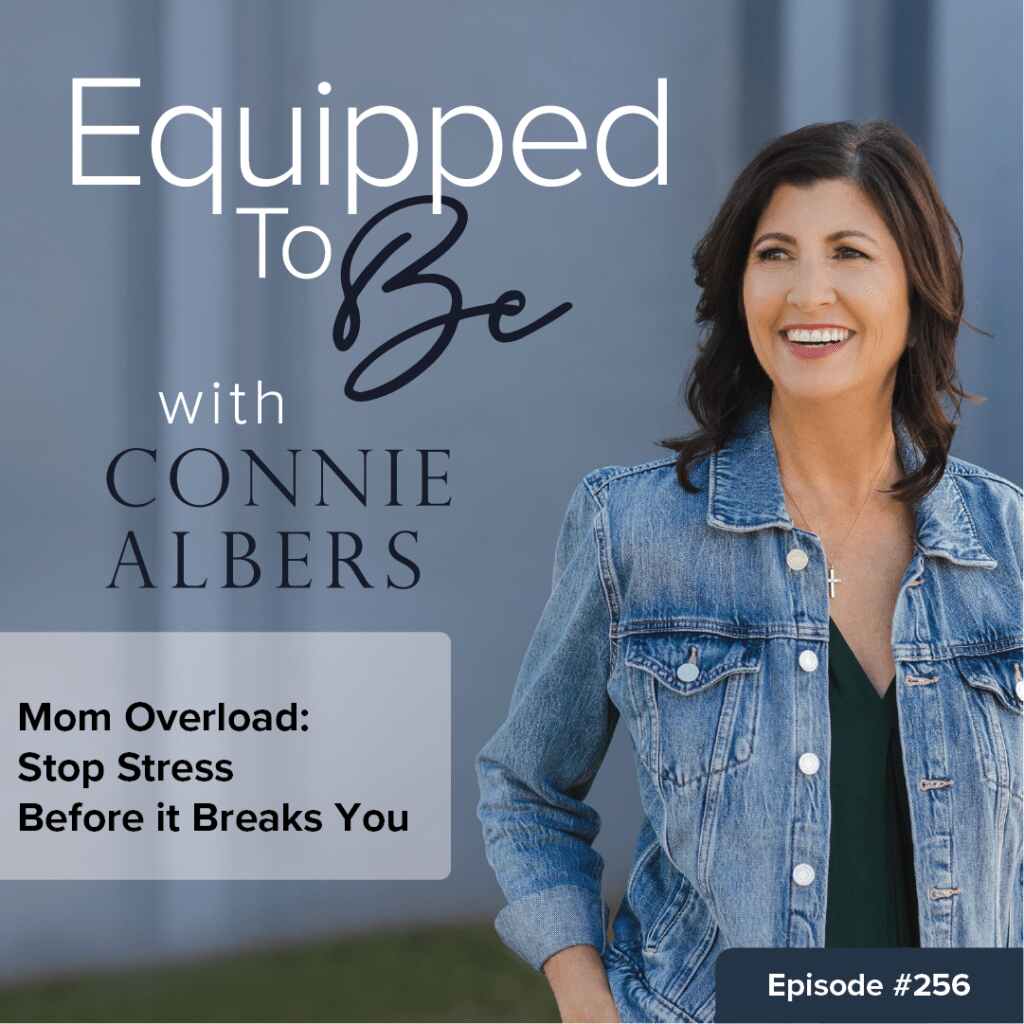
In this episode of Mom Overload: Stop Stress Before it Breaks You, we’re diving into what so many of us feel but rarely say out loud — mom burnout is real. Whether you’re juggling homeschool lessons, managing a busy home, or simply trying to keep up with life, the pressure can feel overwhelming.
But here’s the good news: you’re not alone and don’t have to stay stressed.
If you’ve been feeling overwhelmed, take a deep breath. You don’t have to do this alone. Let’s talk about how you can stop stress before it breaks you. There are simple, faith-filled ways to ease the pressure, regain your peace, and breathe again — even in the middle of motherhood’s busiest seasons.
I remember a season when I was homeschooling, running on little sleep, and feeling like I was failing my kids. One day, I broke down in tears in the laundry room. I sat on the floor, surrounded by piles of unfolded clothes, and whispered, “God, I can’t do this anymore.”
At that moment, I heard God whisper, “You don’t have to do it all.” I realized I didn’t have to be everything to everyone. I needed to give myself grace and lean into God’s strength instead of my own.
Why Moms are Stressed and Overloaded
Motherhood today feels heavier than ever. Between homeschooling, managing the house, keeping up with meals, schedules, emotional needs, and maybe even working or volunteering, moms constantly pour themselves out. We carry the weight of everyone’s needs and often put our own at the bottom of the list. We say yes when we want to say no, we hustle to meet every need, and we feel guilty if we stop to rest. No wonder we’re exhausted, emotionally drained, and teetering on the edge of burnout.
The more we try to juggle everything in our strength, the faster we wear ourselves down — and that’s exactly where burnout begins.
So, how do you know if you’re heading toward burnout? Let’s look at the warning signs many moms miss — and what they might be trying to tell you.
Recognizing the Signs of Mom Burnout
One of the hardest things about stress and burnout is that they sneak up on you. It’s not like one day you wake up and realize, “I’m burned out.” It’s more like a slow leak—you don’t notice it right away, but over time, the pressure builds until you’re emotionally and physically drained.
You might tell yourself this is just how motherhood is, but there are clear signs that you’re overloaded and need to change.
Let’s talk about some key signs that you might be on the edge of burnout:
Emotional Exhaustion– You feel like you have nothing left to give — not to your spouse, your kids, or even yourself.
Increased Irritability – You snap at your kids or spouse more easily over small things.
Trouble Sleeping – Even when you’re exhausted, your mind races and you can’t rest.
Lack of Joy – The things that used to make you happy now feel like obligations.
Feeling Like You’re Failing – No matter how much you do, it feels like it’s never enough.
Brain fog – trouble focusing, forgetting things, or feeling scattered.
Physical symptoms– headaches, stomach issues, and muscle tension that impact your daily productivity.
But here’s the truth: you are enough. Just showing up matters. Even when you’re tired and don’t have all the answers, being there is an act of love and courage.
💡 Scripture Encouragement: “Come to me, all who labor and are heavy laden, and I will give you rest.” – Matthew 11:28 (ESV)
Practical Strategies to Stop Stress Before Your Break
Recognizing burnout is the first step, but managing stress requires action. You don’t need to overhaul your entire life to feel better. Small, intentional changes can make a huge difference in managing stress and protecting your energy.
💡 Scripture Encouragement:“Cast all your anxieties on him, because he cares for you.” – 1 Peter 5:7 (ESV)
Here are five practical strategies to help you regain balance:
1. Set Realistic Expectations
You are not a superhero, and you don’t have to be. Sometimes the stress we feel comes from expecting too much of ourselves.
If you don’t finish the whole homeschool lesson today, it’s okay.
If the laundry doesn’t get folded until tomorrow, everyone will survive.
If you have cereal for dinner one night, your kids will think it’s fun!
Example: Instead of thinking, “I need to get through this whole lesson plan today,” shift to, “My goal is to help my kids engage with learning — and if we don’t finish everything, that’s okay.”
I remember days when I felt utterly depleted emotionally and physically, but somehow, I’d find the strength to keep going. That’s the power of the Lord. It’s not glamorous; it’s steady and quiet, and it matters.
2. Create Margin in Your Day
A packed schedule leaves no room to breathe — and that’s a recipe for stress. You don’t need to fill every moment with activity.
Build in quiet time or downtime for yourself and your kids.
Give yourself permission to rest — it’s productive!
Try to keep a 15-minute buffer between activities to reset.
Example: Schedule “free time” into your daily homeschool routine. It helps you and your kids reset emotionally.
Reflection Question: Where can you create extra margin in your day this week?
3. Learn to Say “No” Without Guilt
Saying “no” isn’t selfish — it’s essential. You can’t do everything, and when you try to, you end up exhausted and resentful.
“That sounds great, but I can’t commit now.”
“Thanks for thinking of me, but my plate is full this week.”
“We’d love to join, but I need a quiet weekend at home.”
Example: If a friend invites you to a homeschool co-op that would add stress to your week, it’s okay to say no. You don’t have to justify it or feel guilty.
Reflection Question: What’s one thing you need to say “no” to this week?
4. Include Your Kids in Household Chores
You are NOT supposed to do it all. Get your children to help with age-appropriate tasks—it’s good for them to learn responsibility.
Let them fold towels — even if they’re not perfect.
Have them help with meal prep or clean-up after school work is done.
Ask your spouse to take over bedtime — even if it looks different than how you’d do it.
Example: Including your kids in meal prep and clean-up not only lightens your load but also gives them a sense of ownership and teaches valuable life skills.
5. Build in Self-Care (Without Feeling Guilty!)
Self-care isn’t selfish — it’s necessary. You cannot pour from an empty cup.
Start small:
10 minutes of quiet prayer in the morning.
A walk around the block after dinner.
Listening to worship music while doing dishes.
Example: If you feel overwhelmed during the day, pause and pray: “Lord, I feel overwhelmed. Please give me peace and help me trust that You are enough.”
Now that you’ve developed some strategies for managing stress, let’s discuss the next step: making these habits stick so you don’t slide back into burnout.
How to Prevent Mom Overload Before It Starts
Managing stress is necessary, but true peace comes from creating rhythms and boundaries that prevent stress from building up in the first place. Reducing stress isn’t about making the “perfect” schedule or life — it’s about finding a rhythm that allows you to thrive.
Jesus gives us a beautiful model for this. He served tirelessly but also took time to retreat and rest. He wasn’t in a constant state of hurry, and you don’t have to be either.
Let’s walk through some practical ways to establish a sustainable rhythm and prevent burnout before it starts: you don’t get it right. It’s recognizing that love is still present even on the hard days.
💡 Scripture Encouragement:“Be still, and know that I am God.” – Psalm 46:10 (ESV)
1. Establish Healthy Boundaries
Setting boundaries is one of the kindest things you can do for yourself and your family. When you say “yes” to everything, you’re saying “no” to your peace and health.
Start setting boundaries around:
Your time – Guard your rest and personal time.
Your energy – Don’t overcommit to activities or obligations.
Your mental load – Stop carrying what isn’t yours to carry.
Example: If a friend asks you to volunteer at a church event, but you know it will create stress for your family, say: “I appreciate you asking, but I can’t commit to that right now.”
Saying “no” does not mean rejecting others—it’s a way to protect your capacity to serve your family well.
2. Limit Comparison and Perfectionism
One of the fastest ways to burn out is to compare yourself to other moms. Social media makes it look like everyone else is homeschooling perfectly, making organic meals, and raising kids who never fight. Let me tell you — that’s not real life!
Give yourself permission to live a life that works for your family, not someone else’s highlight reel.
If your homeschool day doesn’t look Pinterest-worthy, that’s okay.
If you’re not doing fancy crafts — guess what? Your kids will survive.
If you’re more of a “chicken nuggets and frozen peas” mom than a “from-scratch sourdough bread” mom, that’s just fine!
Example: Instead of feeling guilty because you’re not doing it all, remind yourself: “I’m doing what’s best for my family, and that’s enough.”
3. Stay Close to the Lord
When life gets busy, quiet time with God is often the first thing to go. But staying spiritually grounded is essential for managing stress and finding peace.
Make it simple:
Start your day with a short prayer.
Keep a Bible verse on a sticky note where you’ll see it during the day.
Turn on worship music while you cook or clean.
Invite God into your daily life — even in the small, mundane moments.
Example: If you’re feeling overwhelmed during the day, pause and pray: “Lord, I feel overwhelmed. Please give me peace and help me trust that You are enough.”
God isn’t asking you to do this alone — He wants to carry the load with you.
💡 Scripture Encouragement:“You keep him in perfect peace whose mind is stayed on you, because he trusts in you.” – Isaiah 26:3 (ESV)
4. Check In with Yourself Regularly
Burnout doesn’t happen overnight—it builds gradually. That’s why it’s essential to check in with yourself regularly to see how you’re feeling emotionally, physically, and spiritually.
Try this simple weekly check-in:
How am I feeling emotionally?
Am I getting enough rest?
Am I connecting with God?
What’s working well — and what needs to change?
Example: If you feel emotionally drained, it might be time to cut back on commitments or take a rest day from homeschooling. That’s not quitting — that’s being wise.
5. Build a Sustainable Rhythm (Not a Schedule)
Schedules are rigid, but rhythms are flexible. A rhythm gives you structure, but it also allows for life to happen.
Think of your day in terms of “flow” rather than a strict timetable:
Start the day with prayer and a quiet moment with God.
Create blocks of time for homeschooling, chores, and rest.
Build in intentional moments of connection with your kids.
End the day with gratitude — focus on what went right.
Example: Instead of stressing about a 9:00 a.m. start time for school, aim to start between 9:00 and 9:30. That gives you grace and flexibility.
When you create a rhythm that works for your family and stay connected to God’s peace, you’ll have more emotional margin, and burnout will lose its grip. In the closing, I’ll remind you of the key takeaways and encourage you to carry them into your week.
💡 Scripture Encouragement:“For everything there is a season, and a time for every matter under heaven.” – Ecclesiastes 3:1 (ESV)
Encouragement
Friend, I want you to hear me clearly—you are not failing, you’re not falling behind, and you’re not supposed to have it all together all the time. Mom overload, but stopping stress will keep you from breaking.
Motherhood is hard, and juggling the many tasks you are responsible for adds another layer of complexity, but you are not alone.
The truth is, you were never meant to do it all. God doesn’t expect you to be perfect — He expects you to lean on Him. And when you stop trying to hold everything together by your own strength, you make room for God’s grace to carry you.
So, if you’ve been feeling overwhelmed, it’s time to stop striving and start surrendering. You don’t have to say yes to everything, have a spotless house, or have a perfect homeschool day. Your value as a mom isn’t measured by how much you accomplish but by the love you pour into your family.
Remember:
Say “no” without guilt. Ask for help without feeling weak. Rest without shame.
God has called you to motherhood, but He has not called you to burnout.
💡 Scripture Encouragement:“My grace is sufficient for you, for my power is made perfect in weakness.” – 2 Corinthians 12:9 (ESV)
Final Thoughts
If this message resonated with you, I encourage you to share it with another mom who may be feeling the weight of burnout. You’re not alone and don’t have to carry this alone. God has equipped you with everything you need for this season, and I’m cheering you on every step of the way.