
Many parents ask how to stop caring about what other parents think, not because they want to be dismissive, but because they’re exhausted from second-guessing themselves.
A parent came up to me after a conference not long ago and asked a question I hear more often than you might think.
She said, “How do I stop caring what other parents say or think about me… or about my child?”
I could tell she wasn’t dramatic or insecure. She was weary.
Weary of second-guessing decisions she had already prayed over. Tired of replaying conversations in her head long after they were over. Exhausted of feeling steady one minute and completely undone the next because of a single offhand comment.
And before we go any further, I want you to hear my heart clearly.
Wanting approval does not mean you’re weak. It means you’re human.
God knows we care about what others think and say. We were created for relationship. The question isn’t whether we care. It is what we do when something is said that lingers longer than it should.
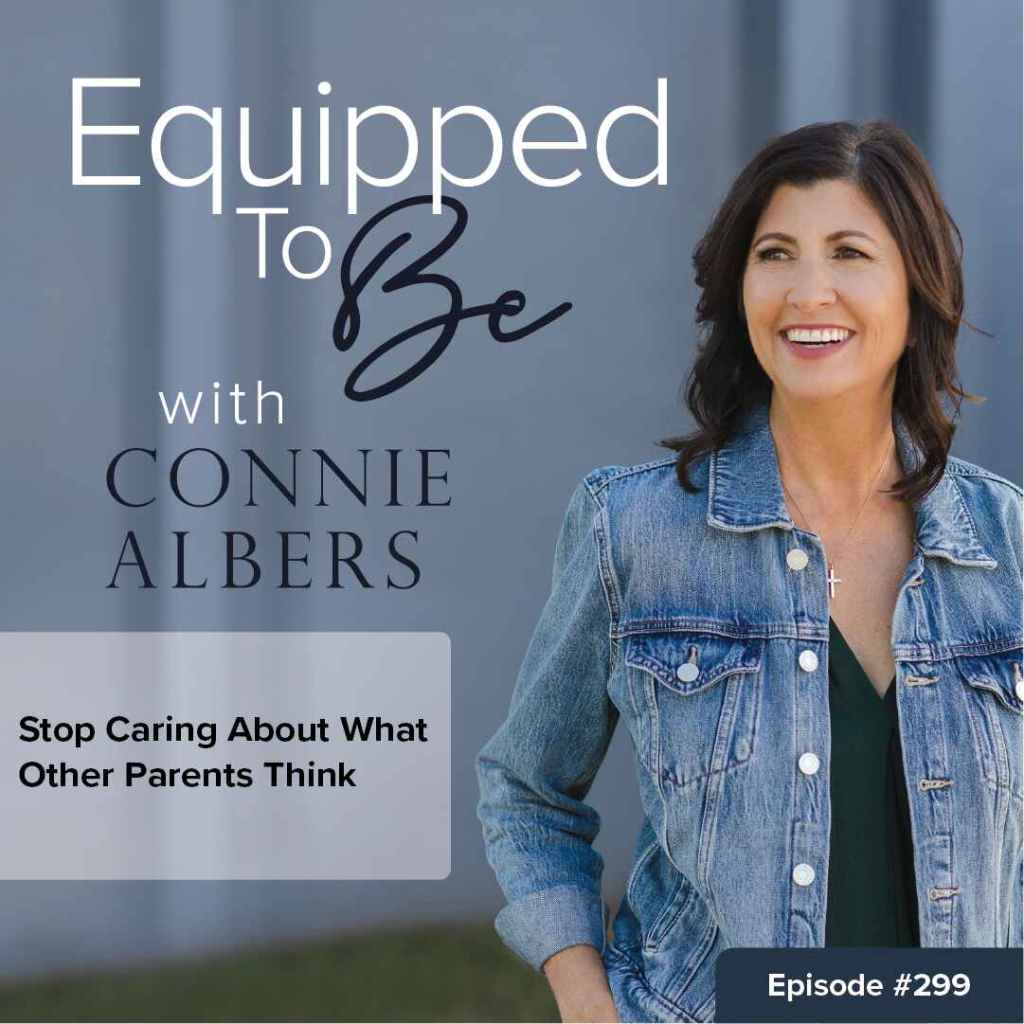
Learning to stop caring isn’t the problem here. The problem is you must learn everyone’s opinion can’t get equal weight.
How to Stop Caring What Other People Think (Without Becoming Hard or Defensive)
If you’re going to stop caring what other people think, you have to do it in a way that strengthens your heart—not hardens it.
There’s a subtle but important difference between becoming steady and becoming defensive. Defensive parents shut down. They become dismissive. They start leading from irritation instead of conviction. But steady parents? They stay open, thoughtful, and anchored, even when opinions swirl around them.
The goal isn’t emotional numbness. It’s emotional maturity.
When you try to “just not care,” you often end up building walls. You tell yourself their opinion doesn’t matter, but deep down it still lingers. So you either over-explain your decisions, withdraw from conversations, or quietly carry resentment. None of those bring peace.
Real strength looks different.
It begins with recognizing that caring about others’ opinions is not the enemy. In fact, humility requires that we stay teachable. Wisdom requires that we remain open. But openness does not mean instability.
Stopping the over-caring happens in layers.
Why Parents Struggle to Stop Caring What Other Parents Think
One of the most freeing things parents can understand is this: You were Created to care what others think. I know that sounds strange, but it is true.
Researcher Brené Brown explains that our brains are wired for connection and belonging. For most of human history, belonging meant survival. Being rejected from the group wasn’t just painful, it was dangerous.
What does this mean?
- Caring what others think helped us survive
- Approval once meant safety
- Disapproval once meant isolation
So when a parent today feels undone by:
- a comment from another mom
- a look at church
- a post on social media
That reaction isn’t immaturity.
It’s old wiring reacting to modern pressure.
The problem isn’t that you care, it’s that everyone’s opinion gets equal weight and that will keep you feeling discouraged and frustrated.
And once every voice gets a vote, clarity begins to wobble. That brings us to what’s really happening beneath the surface.
Why Certain Comments Stick (And Others Don’t)
There’s a reason for that, and it’s not because you’re overly sensitive.
Neuropsychologist Rick Hanson describes the brain this way: the mind is like Velcro for negative experiences and Teflon for positive ones.
That’s why ten encouraging words can slide off, but one sharp comment attaches and replays on the drive home. Your brain is trying to protect you. It pays extra attention to perceived threats.
So instead of telling yourself, “I shouldn’t care,” a better question is, “Why did that stick, and what do I do with it now?”
Understanding what’s happening neurologically moves you out of shame and into wisdom. But understanding alone isn’t enough. Many parents still try the wrong solution.is way:
What Experts Agree on (And Why Parents Struggle So Much)
While I don’t agree with everything these experts believe all of their positions, we can learn from certain aspects of what research shows.
1. Caring what others think is wired into us
Caring what others think is wired into us.
Brené Brown explains that humans are biologically driven to seek belonging. Wanting approval isn’t weakness—it’s survival wiring.
You don’t “stop” caring. You decide whose opinions earn weight.
Parents get stuck when everyone’s voice gets equal authority.
2. The real issue is misplaced authority, not confidence
Clinical psychologist Susan David teaches that emotional freedom comes from values clarity, not emotional suppression.
When parents ask, “How do I stop caring what people think?”
What they actually need is: “How do I decide what matters most when opinions collide?”
Experts seem to agree:
Confidence grows after clarity, not before it.
3. People-pleasing is often fear in disguise
Harriet Lerner has written extensively about family systems and approval-seeking. She notes that over-responsibility for others’ opinions often comes from:
- Fear of disapproval
- Fear of conflict
- Fear of being misunderstood
Translation for parents:
You’re not weak, you’re trying to stay emotionally safe.
4. The brain amplifies criticism more than praise
Neuroscience backs this up. Research popularized by Rick Hanson shows the brain has a negativity bias, critical comments stick like Velcro, positive ones slide off like Teflon.
That’s why: One comment at church, a awkward look at the co-op, or one online post can outweigh ten affirmations.
This isn’t a character issue. It’s a brain issue.
5. Emotionally mature adults choose internal authority
Developmental psychology shows maturity looks like this shift:
From: “Am I doing this right in others’ eyes?”
To: “Is this aligned with my values and responsibility?”
Experts call this internal locus of control, and it’s teachable.
A Simple Framework You Can Learn to Use
CARE → FILTER → ANCHOR
- CARE – Acknowledge the feeling (don’t shame it)
- FILTER – Ask: Is this person informed, invested, and aligned with my values?
- ANCHOR – Return to responsibility, conviction, and calling
CARE — Acknowledge the feeling
“This bothered me.”
No minimizing. No shaming. Just honesty.
FILTER — Decide whose voice counts
Ask:
- Is this person informed?
- Are they invested?
- Are they aligned with my values?
If not, their opinion gets data status, not authority.
ANCHOR — Return to responsibility and values
“This is my child.
They are my responsibility.
I am called to teach and train them according to scripture, our values, and in a manner that fits my children.
That’s not indifference, it’s emotional maturity. And you can learn to how to care, filter, then anchor your thoughts in truth.
What Emotionally Mature Parents Understand
Emotionally mature parents don’t need everyone to agree with them. They need to be able to live with themselves.
They’ve learned:
- discomfort isn’t danger
- disagreement isn’t rejection
- and conviction often feels lonely at first
If everyone approves of your parenting, chances are you’re not leading—you’re blending.
Let that sit.
Final Thoughts for Parents
I keep thinking about that mom who asked me this question.
What she really wanted wasn’t to stop caring, not really. It was to stop feeling shaken every time some well meaning parent makes a comment about you or your child.
And that is possible.
Not by hardening yourself, but by anchoring yourself.
You don’t need to stop caring what people think. Instead, decide who gets to shape you, and who doesn’t.
If this episode resonated with you, you might find my book Parenting Beyond the Rules helpful. It’s written for parents who want to lead with conviction, not fear, and raise children with confidence and joy.
Sponsors, Related Shows, and Links
The following may contain affiliate links:
- Parenting Beyond the Rules: Raising Teens with Confidence and Joy by Connie Albers
Related Episodes
How to Connect with Connie
- Follow Connie Albers on Instagram | Facebook |X | Pinterest
- Learn more about Connie’s book, Parenting Beyond the Rules.
- Learn more about the Equipped To Be podcast
Subscribe to Equipped To Be
If you find this podcast helpful, please consider subscribing and leaving a review. It’s a great way to support the show and only takes a few seconds.