
Proverbs 31 Woman: How to Think Like Her and Reject the Lies is not another invitation to add more to your already full life. In fact, it begins with something many Christian women need to hear: She did not do it all, and she certainly did not do it all in one day.
Yet generations of women have read Proverbs 31 as though God handed them a daily checklist. Rise before dawn. Care for everyone. Run a business. Buy property. Serve the poor. Speak wisely. Prepare for every possible problem. Keep the household running—and somehow look joyful while doing it.
No wonder so many women reach the end of the passage feeling inadequate instead of encouraged.
But Proverbs 31 is not the snapshot of one impossibly productive day. It is the portrait of a woman's life—her character, decisions, relationships, work, wisdom, and faithfulness developed over many years.
When we understand that, the passage stops feeling like a burden and starts becoming an invitation. Instead of asking, “How can I possibly do everything she did?” we can ask a much better question:
How can I learn to think as she thought and become a woman whose life is governed by godly wisdom?
What Does the Bible Really Say About the Proverbs 31 Woman?
The Bible presents the Proverbs 31 woman as wisdom lived out over a lifetime, not as a rigid formula every woman must follow.
Proverbs 31:10–31 is a carefully constructed Hebrew acrostic poem. Each verse begins with the next letter of the Hebrew alphabet, creating a complete A-to-Z portrait of noble character. The phrase commonly translated as “an excellent wife” is eshet chayil—a woman of strength, capability, valor, and noble character.
That language matters. This is not a fragile, passive, or frantic woman. She is strong enough to carry responsibility, wise enough to make decisions, discerning enough to recognize opportunity, and compassionate enough to notice the needs of others.
The entire book of Proverbs teaches readers how wisdom shapes ordinary life. It begins by declaring that “the fear of the Lord is the beginning of knowledge” (Proverbs 1:7), and it closes with a woman whose life reflects that foundation:
“Charm is deceitful, and beauty is vain, but a woman who fears the Lord is to be praised.” —Proverbs 31:30, ESV
Her work is impressive, but her work is not the point. Reverence for God is the source from which everything else flows. Once we see that foundation, we can begin separating biblical truth from the expectations women have mistakenly placed on themselves.
Lie #1: A Proverbs 31 Woman Does Everything Every Day
Perhaps the most damaging lie is assuming all the activities in this poem took place within the same day, or even the same season.
Proverbs 31 gathers the fruit of a mature life into 22 verses. The woman described has developed business judgment, household wisdom, relational trust, generosity, foresight, and strength. Those qualities didn't form overnight, and not every responsibility required equal attention at the same time.
A mother caring for small children lives differently from a woman launching a business. Someone walking through illness cannot carry the same load she managed in a season of good health. Caregiving, grief, financial hardship, new opportunities, and changing family needs all reshape the way faithfulness looks.
God does not ask you to compress an entire lifetime into today.
Rather than treating Proverbs 31 as a schedule, receive it as a picture of what wisdom can produce across many years. That perspective makes room for another truth women often forget: your worth was never supposed to depend on your output.
Lie #2: Her Worth Comes From How Much She Accomplishes
Long before the passage describes this woman's work, it establishes her value: “She is far more precious than jewels” (Proverbs 31:10).
Her worth is not the reward she receives for waking early, earning money, serving her family, or staying prepared. Value is recognized before the accomplishments are listed.
Women can become so accustomed to being needed that we begin confusing usefulness with identity. We quietly believe we are most valuable when everyone depends on us, the house is running smoothly, the work is finished, and no one is disappointed.
That belief produces endless striving because there will always be one more need to meet.
A wise woman works from an established identity rather than working to earn one. She can serve generously without believing she must rescue everyone. Excellence matters, but perfection is not required. Rest does not make her lazy, and asking for help does not make her weak.
When worth is settled, a woman can steward her responsibilities without allowing them to define her. That inner security also enables her to use strength and leadership without apologizing for either.
Lie #3: Biblical Womanhood Means Being Passive
Nothing about the Proverbs 31 woman is passive. She evaluates property, makes a purchase, plants a vineyard, produces goods, conducts business, manages resources, prepares for the future, teaches wisdom, and cares for people in need.
Her husband trusts her, but she is not portrayed as incapable of acting without him. Sound judgment has made her trustworthy. Initiative allows her to respond to opportunities, while wisdom keeps her from acting recklessly.
Biblical strength is not harshness, dominance, or self-sufficiency. It is the capacity to remain faithful, make sound decisions, endure difficulty, and act courageously. Proverbs 31:25 describes strength and dignity as her clothing, suggesting that these qualities have become part of how she carries herself.
Some women lead publicly. Others exercise enormous influence in places few people see. Many will do both during different seasons. Scripture does not demand invisibility; it calls us to faithfulness.
Her example therefore invites a more personal question: Where has God asked you to exercise courage, wisdom, or initiative in your present season?
Lie #4: A Godly Woman Never Feels Tired, Afraid, or Overwhelmed
Strength does not mean living without human limitations. The poem praises this woman's preparedness, but it never claims that she felt no fatigue, encountered no disappointment, or needed no help.
“She is not afraid of snow for her household” (Proverbs 31:21) is not a command to anticipate and control every possible outcome. Her confidence comes from having faithfully prepared for what she could foresee.
Preparation says, “I will do what wisdom requires and trust God with the rest.” Anxiety insists, “Everything depends on me.”
Those mindsets may produce similar activity on the outside, but they arise from entirely different places. One is grounded in faithful stewardship; the other is driven by fear and the illusion of control.
A woman of valor can be strong and still be tired. Wisdom does not prevent grief, and faith does not eliminate the need for rest. Sometimes the most discerning decision is to stop, receive help, or acknowledge that a responsibility no longer belongs to you.
Recognizing your limits is not a departure from wisdom. It can be one of its clearest expressions, and it frees you to follow God's assignment rather than someone else's example.
Lie #5: Every Faithful Woman's Life Should Look the Same
Proverbs 31 gives us transferable principles, not an identical lifestyle every woman must reproduce.
Your current assignment may involve raising children, caring for aging parents, building a business, supporting a spouse, serving a church, healing from loss, managing a home, mentoring younger women, or carrying several of those responsibilities together. Another woman's obedience will not necessarily resemble yours.
Comparison becomes especially dangerous when we compare her visible season with our hidden struggle—or her greatest strength with an area where we are still growing.
Wise stewardship begins by asking:
- What has God placed in my hands?
- Which relationships require my attention right now?
- What needs to be cultivated in this season?
- Where am I acting from conviction, and where am I responding to pressure?
- What am I carrying that God never asked me to carry?
Not every good opportunity is your assignment. Neither is every need yours to meet. Once those distinctions become clear, we can turn from imitating the woman's activities to developing the wisdom behind them.
How Does a Proverbs 31 Woman Think?
Her actions reveal a mind shaped by reverence, discernment, responsibility, and a long view of life. Thinking like a Proverbs 31 woman does not mean copying every task she performed; it means allowing the same biblical wisdom to guide your choices.
She Thinks Like a Steward
She gives thoughtful attention to everything entrusted to her: relationships, resources, abilities, time, opportunities, and responsibilities. Stewardship asks, “What would faithfulness look like with what I have?” It doesn't waste energy wishing for another woman's life.
She Considers Before She Commits
Before buying the field, she considers it (Proverbs 31:16). Observation comes before action. Emotion may inform a decision, but it does not control the process.
Modern women can practice this by pausing long enough to ask whether an opportunity fits their priorities, season, resources, and calling. A thoughtful no can be every bit as faithful as an enthusiastic yes.
She Prepares Without Living in Panic
Foresight helps her meet foreseeable needs, while trust keeps preparation from becoming obsession. She does what can be done today without assuming she must control tomorrow.
She Uses Words to Build
Proverbs 31:26 joins wisdom and kindness: “She opens her mouth with wisdom, and the teaching of kindness is on her tongue.” Truth without kindness can become harsh. Kindness without wisdom can avoid what needs to be said.
Maturity holds both together. Her words bring clarity, correction, encouragement, and peace because her speech has been shaped before the moment of pressure arrives.
She Thinks Beyond Immediate Applause
This woman is willing to invest in work whose fruit may take years to appear. Her confidence is not tied to today's approval, and her decisions are not ruled by the desire to impress others.
That long view protects her from performing for people and positions her to remain faithful when no one seems to notice. Ultimately, each of these habits grows from the same source: a life ordered around God.
How Do You Become a Proverbs 31 Woman?
Becoming a Proverbs 31 woman is a lifelong process of letting God shape your character and renew your thinking.
Begin with reverence, not a list. Ask whether God or culture is defining your understanding of womanhood, success, strength, beauty, and worth. Then bring your actual season—not an idealized version of it—before the Lord.
Practical growth can begin with five choices:
- Settle your identity. Remember that your value isn't measured by your productivity or other people's dependence on you.
- Name your present assignment. Identify the people and responsibilities God has genuinely entrusted to you in this season.
- Practice one wise pause. Before saying yes, spending money, taking on a project, or responding emotionally, stop and consider.
- Prepare what you can. Faithfully address foreseeable needs, then release the outcomes you cannot control.
- Choose wise and kind words. Before speaking, ask: Is it true? Is it necessary? Is it wise? Can I say it with kindness?
None of these choices creates instant maturity. Over time, however, repeated acts of faithfulness form a woman who is trustworthy, discerning, courageous, generous, and increasingly secure in the Lord.
This is how a portrait of wisdom becomes a pattern for real life—one choice, one season, and one year at a time.
Remember, You Are Building the Story of Your Life
The Proverbs 31 woman was never meant to make you feel as though you are perpetually behind. Her life reminds us that godly character is formed slowly, through ordinary decisions that may seem small in the moment.
You will not emphasize every responsibility equally in every season. Some years will be fruitful and visible; others will require quiet endurance. Certain chapters will include building and expansion, while others will call for healing, waiting, releasing, or beginning again.
God remains present in all of them.
So stop asking, “How can I do everything she did?” Instead, consider: “What would wisdom and faithfulness look like in the life God has given me today?”
You do not become a Proverbs 31 woman by squeezing her entire life into one exhausting day. You become her by allowing God to form wisdom, strength, dignity, and faithfulness in you over a lifetime.
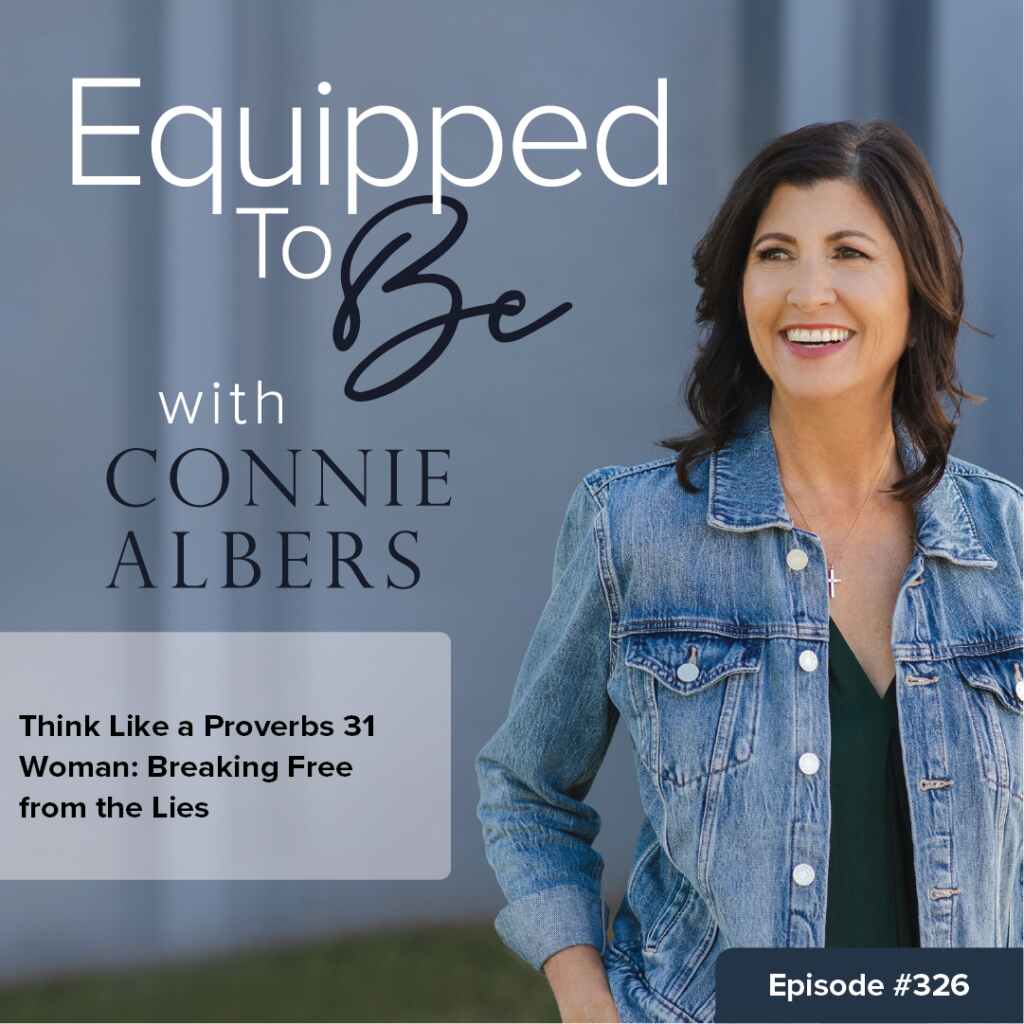
Listen to this episode of Equipped To Be for a deeper conversation about the lies women believe, the truth of Proverbs 31, and how to become a woman whose life is governed by godly wisdom. Then share it with a woman who needs freedom from the pressure to do everything at once.
About, References, and Links
The following may contain affiliate links.
- Learn more about Parenting Beyond the Rules


