Raising Grateful Kids in a Me-First World: Why the 30-Day Kids Gratitude Challenge Might Be Exactly What We Need
Let’s be real, mama, we’re in the trenches.
Between making meals, managing meltdowns, folding that never-ending laundry pile (seriously, how do they go through six outfits a day?!), and trying to hold our own sanity together with coffee and Jesus, we’re also trying to raise good humans.
Not just polite kids — grateful ones.
Kids who notice the small stuff, who don’t crumble when life isn’t fair, who can say “thank you” without being prompted, and who mean it.
But in today’s world, that’s not easy. Entitlement is everywhere. Gratitude? It’s quieter. But here’s the good news — it’s not gone. And with a little intention, we can bring it back into our homes.
Why Gratitude Matters (More Than Ever)
Gratitude isn’t just a feel-good attitude. It’s a life-changer. Research shows it boosts emotional resilience, improves relationships, and even helps kids cope better with stress and anxiety. And let’s be honest — we all want our children to be more content, more thoughtful, and more grounded.
But the real kicker? Gratitude is taught.
It’s shaped in the everyday. In dinner table conversations. In thank-you notes scribbled in crayon. In bedtime prayers whispered over tangled blankets and tired hearts.
Enter: The 30-Day Kids Gratitude Challenge
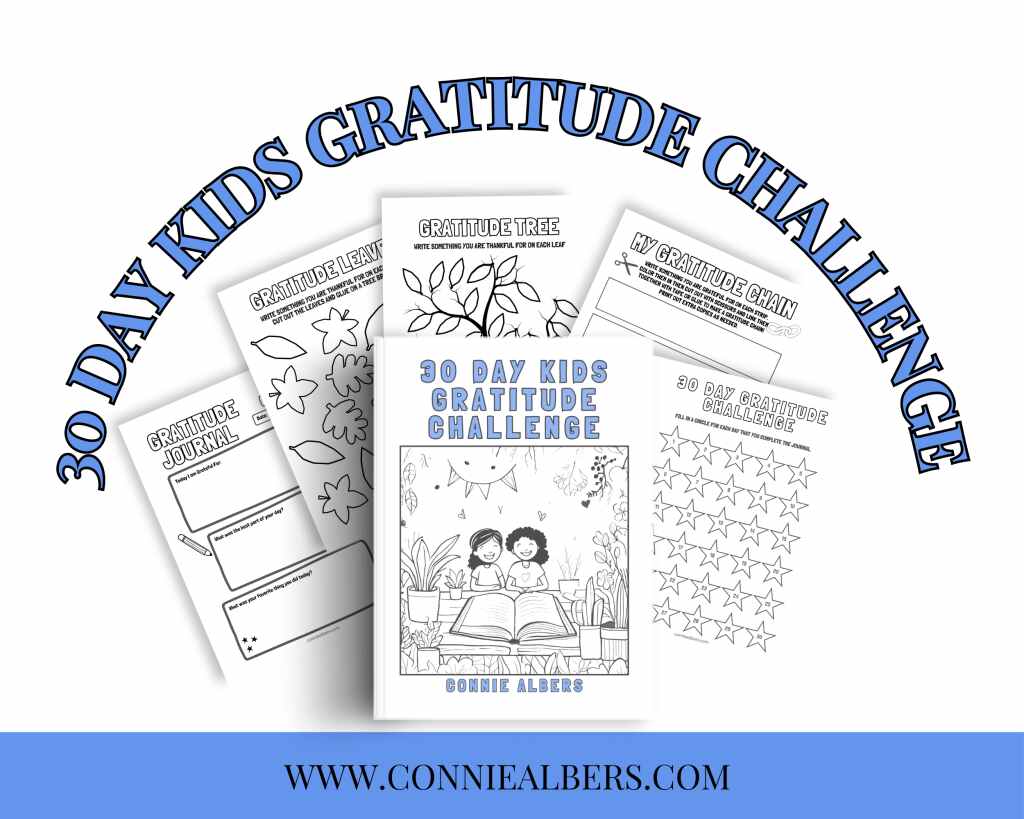
That’s why I created the Kids Gratitude Challenge — not as another item to pile on your to-do list, but as a gentle, fun rhythm to weave into your child’s day. It’s practical, simple, and just the right amount of structure to make gratitude stick.
This 30-day printable challenge includes:
A daily gratitude journal with prompts like “What was your favorite thing you did today?” and “What are you thankful for?”
Gratitude BINGO — a fun, interactive way for your kids to practice kindness and thankfulness in real life.
Creative prompts like the Gratitude Alphabet, Gratitude Tree, and My Gratitude Chain that get kids thinking (and moving).
Bonus activities like writing wishes for others on clouds, drawing their happy place, and mapping out where they’ve traveled.
It’s colorful, creative, and best of all — kid-approved.
How to Use It Without Overwhelm
No pressure to complete it perfectly. No gold stars required.
You can print the pages, stick them on the fridge, tuck the journal sheets in their lunchbox, or make it a cozy end-of-the-day routine. Some moms turn it into a family challenge, filling out the gratitude leaves together or seeing who gets “Gratitude BINGO” first.
The goal isn’t perfection. Its presence.
Presence in helping your child notice what they already have. Presence in teaching them that joy often grows in the soil of appreciation. Presence in showing them that thankfulness isn’t just for November — it’s a lifestyle.
A Few Gratitude-Inspired Ideas to Try This Week:
Ask your child at bedtime: “What was the best part of your day?”
Do one Gratitude Bingo square together — like leaving a thank-you note for the mail carrier.
Write or draw one thing they’re thankful for and hang it up where everyone can see.
It’s in these little moments that big character is built.
Mama, You’re Planting Seeds
I know it feels like you’re repeating yourself, and I know some days it seems like your kids don’t get it. But don’t underestimate the seeds you’re sowing. Gratitude may not bloom overnight, but it grows slowly, deeply, and beautifully.
You are doing holy, heart-shaping work. Keep going.
And if you need a hand (or a printable), the 30-Day Kids Gratitude Challenge is here to help you raise kids who see the good and express gratitude.
Because thankful hearts grow in homes just like yours. ~connie
You can grab your copy of the challenge at HERE — and don’t forget to share your family’s gratitude moments with us on Instagram @conniealbers. Let’s raise a generation that chooses gratitude on purpose.
Are you ready to let go of guilt and embrace what really works in parenting? Or at least for this year! As we settle into 2025, it’s time to leave behind the trends that made us question our sanity and welcome ones that actually make life easier. Today, I want to focus on 5 Parenting Trends to Embrace to help you simplify your routines, connect with your children, and watch as your family flourishes.
Parenting trends evolve with the times, but not all of them are worth carrying into the future. Some modern parenting practices are creating unnecessary stress for parents and children alike.
Before jumping into these parenting trends, let’s start with one that will instantly lighten your mental load and bring more peace to your daily routine. Ready? Let’s begin with simplifying your schedule—because less really is more. For instance:
Over-the-Top Celebrations: Are They Really Worth It?
Let’s be honest—who hasn’t felt the pressure to throw an Instagram-worthy birthday party or go all out for the holidays? It’s easy to get swept up in the idea that bigger is better, especially when social media is filled with picture-perfect celebrations. But here’s the thing: those elaborate parties and inch-stone celebrations (yes, even for trying new food) often come with more stress than joy. Between the cost, the planning, and the pressure to impress, it can leave you feeling drained rather than fulfilled.
Here’s the good news: your kids don’t need a Pinterest-perfect party to feel loved. What they’ll remember most is the way you made them feel—special, cherished, and celebrated in a way that’s true to your family. A simple gathering with their favorite cake and a game of tag in the backyard? That’s the stuff memories are made of. Let’s take the pressure off and focus on celebrating in ways that bring joy, not stress.
Parenting Trend: Overscheduling Kids
Does it ever feel like your life is one big carpool, from soccer practice to music lessons to tutoring, with barely a moment to breathe? You’re not alone—so many parents find themselves in this nonstop cycle, believing it’s the best way to help their kids thrive. But here’s the truth: overscheduling can leave both you and your kids feeling burned out. Children need downtime—those unstructured moments to play, daydream, and let their creativity shine. Without it, they miss out on opportunities to recharge, and so do you.
Remember, packed schedules can cause family connections to take a backseat. Dinner conversations, game nights, or just relaxing together on the couch become rare luxuries. So here’s a thought: Try focusing on one or two activities your child truly loves, and reclaim your evenings with family nights that are all about laughter and connection. Because in the end, those simple, shared moments are what your kids will treasure most.
Parenting Trends: Goodbye Perfection, Hello Real Life
Let’s address the elephant in the room: perfectionism. Social media has made it easy to fall into the trap of curated parenting, where every post looks like a magazine spread. But in real life? It’s messy, chaotic, and beautiful.
A word of caution: If you have perfectionistic tendencies, you need to ask the Lord to help you change. But it’s worth noting to give yourself some grace while you change.
Parenting Trends: Simplify Holiday Madness
Remember when holidays were about simple joys—family traditions, laughter, and the excitement of the season—rather than stress and exhaustion? Lately, every holiday has turned into a full-blown production, with back-to-back school parties, neighborhood events, and costume changes rivaling a Broadway show. And while making memories is important, so is your sanity. It’s easy to get caught up in the pressure to do it all, but sometimes less really is more. Instead of stretching yourself thin, choose one or two meaningful activities that truly bring joy to your family. Reuse decorations, repurpose costumes, and permit yourself to slow down. Your kids don’t need a Pinterest-perfect holiday; they need a happy, present parent who actually gets to enjoy it with them.
Less is often more when it comes to celebrating. It can take a little practice, but you will enjoy making memorable moments when you do.
Parenting Trends: Focus on Simplicity and Connection
Today is your fresh start. Let’s make it the year we let go of trends that add stress and focus on what truly matters: building stronger connections with our kids and creating memories that last a lifetime. These five parenting trends can have a dramatic impact on your family.
Set Boundaries: Learn to say no to trends or commitments that don’t serve your family’s well-being.
Focus on What Matters: Ask yourself, “What will my child remember most about this moment?”
Embrace Authenticity: Celebrate the perfectly imperfect journey of parenting.
5 Parenting Trends to Embrace in 2025
These 5 Parenting Trends to Embrace offer simple, practical ways to reduce pressure, reconnect with your kids, and enjoy family life.
Thank you for joining me today on Equipped to Be. Remember, parenting isn’t about keeping up—it’s about showing up. Let’s commit to a year of simplicity, connection, and flourishing.
If you enjoyed this episode, please subscribe, leave a review, and share it with a friend who might need this reminder.
If you’re anything like me, your days are full before your feet hit the floor. Between caring for your family, managing work, keeping up with the home, and being the emotional glue that holds everything together, it’s easy to forget there’s a “you” in the middle of all this. A woman with dreams. With goals. With passions that still matter.
That’s exactly why I created the Reflecting on Your Goals and Passions Journal.
This isn’t your typical “write down five goals and go get ’em” kind of journal. It’s a gentle, faith-rooted space designed to help you—yes, even in the midst of dishes and laundry and soccer practice—pause long enough to ask:
What really lights me up?
What has God been nudging me toward that I’ve been too busy (or too tired) to notice?
How can I align my days with what matters most?
Because here’s the truth: You can live with intention, even in this season of chaos. You can find clarity about where God is leading you. You can remember what it feels like to dream again—and take real steps toward those dreams without feeling guilty or overwhelmed.
What’s Inside the Journal?
Guided prompts that help you reflect on your identity, passions, and calling in Christ
Scripture-based encouragement to remind you that you are never alone in your journey
Simple, intentional action steps to help you move forward in small, meaningful ways
Weekly reflection pages to pause, regroup, and refocus on what truly matters
I didn’t want to create a journal that added another “thing” to your to-do list. I wanted to make one that felt like a breath of fresh air in your week. A space to meet with the Lord, ask the deeper questions, and receive the wisdom He’s ready to give.
Why This Journal Matters for Moms of Faith
As moms, we are so used to showing up for everyone else. But what about showing up for the woman God created us to be?
When we take time to reflect on our own goals and passions, filtered through prayer and God’s Word, we’re not selfish. We’re obedient. We’re faithful. And we’re modeling for our kids what it looks like to live a life surrendered, purposeful, and deeply alive.
Whether you’re trying to rediscover who you are outside of motherhood, launch a creative project, grow spiritually, or stop feeling like you’re stuck on autopilot, this journal is for you.
Let This Be Your Starting Point
You don’t have to have it all figured out. You don’t need a five-year plan or a color-coded spreadsheet. You need a quiet moment, an honest heart, and a willingness to let God speak.
Let this journal be your companion in that process.
He’s already planted the passions in your heart. Let’s water them together.
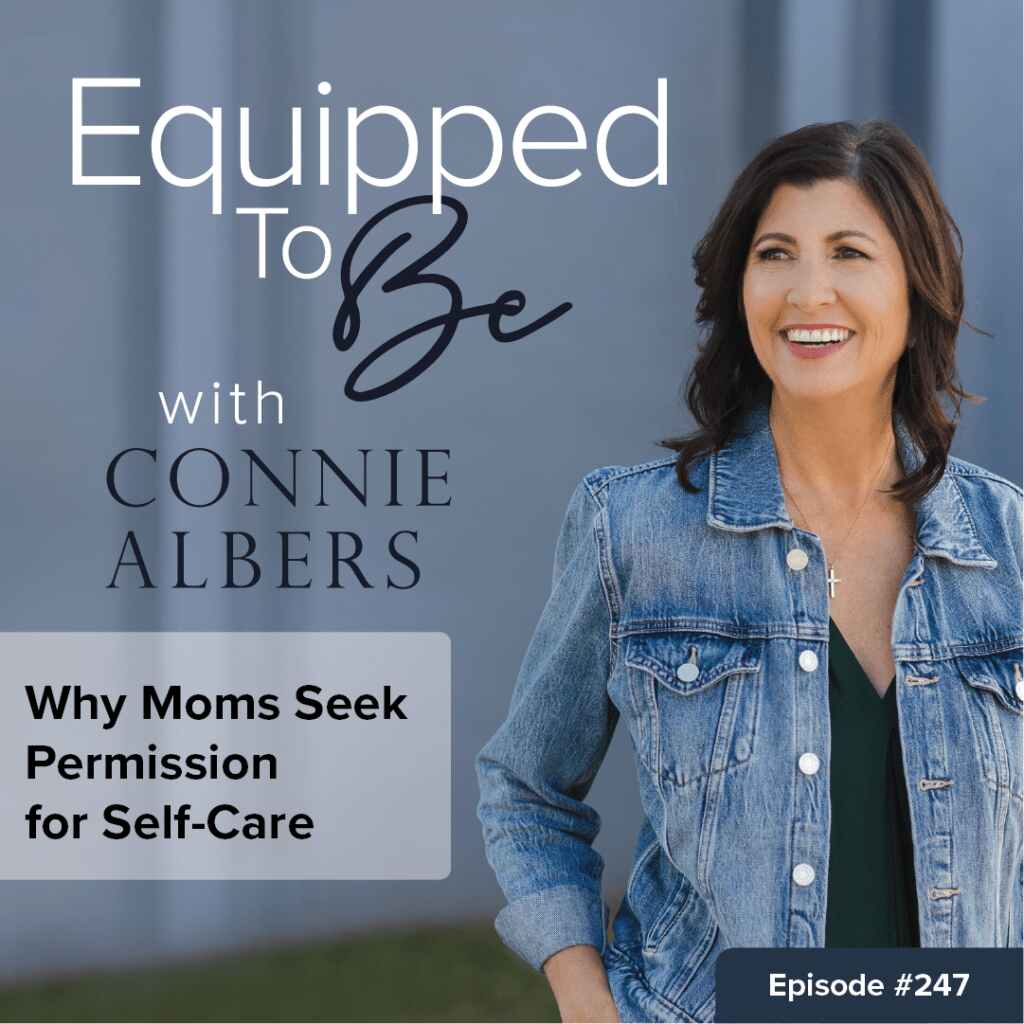
Have you ever found yourself hesitating to ask for something as simple as five minutes to drink your coffee while it’s still hot—or even a shower without someone knocking on the door? If you have, you’re not alone. Moms everywhere seek permission, often from their spouses or even themselves, to care for their most basic needs. Why is that? Why do we feel guilty for wanting a moment to breathe? In this episode, we’re diving into the heart of this growing trend—why moms feel the need to ask for self-care, how societal pressures and “mom guilt” play a role, and what we can do to break free. Spoiler: taking care of yourself isn’t selfish; it’s survival. Let’s unpack this together.
Why do we carry this guilt like an extra piece of luggage on an already overloaded trip called motherhood? Let’s talk about it—because you deserve care too, and spoiler alert: the world will not fall apart if you take a break. (Though it might feel like it sometimes!)
The Universal Struggles of Motherhood
Motherhood is a beautiful, transformative journey, but let’s be honest—it’s also one of the hardest things you’ll ever do. Whether you’re cradling a newborn, chasing a toddler, or navigating the complex emotions of raising a teenager, the mental load of motherhood is relentless.
It’s not just about keeping up with the day-to-day tasks like feeding, cleaning, work, or scheduling activities—it’s about carrying the weight of your family’s needs, emotions, and futures. And the truth is, society has set us up to believe we need to be “everything for everyone.”
Endless Mental Load
As moms, we’re not just managing logistics; we’re juggling expectations. We’re the ones remembering doctors’ appointments, planning meals, keeping track of school schedules, and anticipating the needs of everyone in the family before they even ask. And no matter how much we do, there’s always that nagging feeling that it’s not enough.
Society has reinforced the idea that “good moms” are selfless, constantly giving, and always on top of everything. It’s no wonder so many of us struggle with guilt when we even think about taking a moment for ourselves.
Mom Guilt at Every Stage
Motherhood may look different depending on the season you’re in, but the feelings of guilt and pressure remain the same.
Signs that your parenting approach might be broken:
New Moms: If you’re a new mom, you’re probably navigating sleepless nights, feeding schedules, and figuring out how to keep this tiny human alive. The world tells you that your baby should come first in every way, which makes it easy to feel guilty for even wanting a hot shower or five minutes of peace.
Moms of Multiples: The struggle multiplies if you’re raising more than one child. You’re not just managing individual needs; you’re also playing referee, peacemaker, and multitasking expert. And let’s be honest—trying to give equal attention to all your kids while keeping the household running feels impossible. The guilt of “not doing enough” for each child can be overwhelming.
Moms of Older Kids: If your kids are older, the challenges shift, but don’t disappear. You’re helping with homework, driving them to activities, and supporting them emotionally as they navigate friendships, school pressures, and big life decisions. And even though they’re more independent, you may find yourself asking, “Am I doing too much or not enough?”
No matter the stage of motherhood, there’s always that pressure to measure up—to be the mom who’s got it all figured out, who never misses a beat, and who always puts her family first.
The Pressure to Be “Everything for Everyone”
This pressure isn’t something we consciously choose; it’s something we absorb from the world around us. From social media to family expectations, there’s this unspoken rule that moms should have it all together.
We see other moms posting their picture-perfect moments online and wonder why we can’t seem to manage the same. We hear well-meaning advice from others and feel like we’re falling short because we’re not doing things “their way.”
But here’s the thing—motherhood is hard for all of us. Behind every polished Instagram photo is a mom who has her own struggles, her own doubts, and her own moments of exhaustion.
You Are Not Alone
The struggles you’re facing are universal, and so are the feelings of guilt. Whether you’re up at 2 a.m. with a crying baby or worrying about your teenager’s choices, you’re doing the best you can in a role that demands so much.
You don’t have to be everything for everyone. The most important thing is that you’re there, showing up for your family in your own way. And while it’s easy to focus on all the things you haven’t done, I want to remind you of this: you’re already doing so much.
Motherhood is challenging at every stage, but you don’t have to carry the weight alone. It’s okay to take a step back, to breathe, and to give yourself the grace you so freely give to others. ❤️
The Need for Permission—Why It Happens
If you’ve ever felt guilty for taking time for yourself, you’re not alone—I’ve been there too. It’s not your fault. Our world has long told moms that we’re supposed to be everything to everyone, all the time. These societal expectations paint mothers as having to be“selfless” caregivers, implying that any act of self-care takes something away from our families. That idea? It’s exhausting—and it’s wrong. Yes, we are all those things, but God tells us to work for six days and then rest.
How Societal Norms Shape Us
From the moment we become moms, there’s an unspoken pressure to sacrifice our own needs for the sake of our families. Think about the phrases we often hear:
“A good mom puts her children first. “Mothers are the glue that holds everything together.”
While there’s truth in the importance of a mother’s role, these messages leave little room for our humanity. They suggest that caring for yourself somehow means you’re failing as a mom.
How This Affects New Moms
For new moms, these societal expectations are magnified. You’re adjusting to a completely new life—trying to figure out how to keep this tiny human alive while navigating your own exhaustion and emotions.
And yet, the fear of being judged can feel overwhelming:
“What if people think I’m lazy for asking my partner to take over so I can nap?”
“Am I a bad mom if I need a break from my baby for just five minutes?”
The fear of being labeled as selfish keeps many new moms from even voicing their needs, let alone meeting them. This is where guilt starts to creep in, making you feel like you’re doing something wrong simply by wanting time for yourself.
How This Affects Seasoned Moms
The struggle doesn’t stop as your kids grow. For seasoned moms, it often looks like this: you’ve spent years being the go-to person for everything—meals, homework help, emotional support—and now it feels impossible to step back.
“If I don’t do it, who will?”
“My family is used to me taking care of everything. How do I let that go?”
Even when your kids are older and capable of doing more on their own, it can be hard to shift out of the mindset that your value as a mom is tied to how much you do for everyone else.
The Role of a Spouse, Family Member and Internailzed Guilt
Sometimes, it’s not just society, it’s the people closest to us. Partners or family members might unintentionally reinforce these expectations by assuming we’ll handle it all.
A partner might say, “You’re so much better at calming the baby,” which leaves you feeling like taking a break isn’t an option.
Family members might comment, “Your kids are lucky to have such a hands-on mom,” which sounds like praise but adds pressure to keep doing everything.
And then there’s the voice in your own head—the one that says:
“I shouldn’t need help.”
“Other moms seem to manage just fine. Why can’t I?”
This internalized guilt can be the hardest to overcome because it convinces you that asking for self-care is a weakness rather than a strength. Your spouse or other family members can’t read your mind. They don’t know how you’re feeling unless you tell them.
Don’t be afraid to be vulnerable and ask for help! They love you and want you to be your best.
You’re Not Alone
Here’s the truth: needing time for yourself doesn’t mean you’re failing as a mom. It means you’re human. The idea that mothers have to be selfless 24/7 is a myth, and it’s okay to reject it.
Whether you’re a new mom afraid of judgment or a seasoned mom struggling to let go, know this: you’re not alone. Every mom, at every stage, has wrestled with these feelings. And it’s not your fault.
What would happen if we started giving ourselves the same grace and care we show our children? What if we stopped asking for permission to rest and simply claimed it as our right?
You don’t have to do it all, and you don’t have to do it alone. Let’s break free from the guilt together—one step at a time. ❤️
The Cost of Ignoring Self-Care
Motherhood is a beautiful, rewarding journey, but can also be exhausting. Whether you’re a new mom navigating sleepless nights or a seasoned mom juggling the demands of older children, the temptation to put everyone else first is strong. But ignoring self-care doesn’t just take a toll on you—it can impact your family, too. Let’s explore why prioritizing yourself is essential for your health, happiness, and the well-being of your loved ones.
The Mental and Physical Toll of Neglecting Self-Care
New motherhood often feels like a whirlwind of joy, exhaustion, and endless to-dos. For many new moms, the pressure to meet every need of their baby—and everyone else—leaves little room to care for themselves. But Mom can’t pour from an empty pitcher. We must not neglect to get some time to refresh our souls. So, what happens if we overlook self-care?
Increased Risk of Postpartum Depression and Anxiety: Without moments to recharge, new moms are more likely to experience mental health struggles such as postpartum depression and anxiety. Studies show that the lack of rest, isolation, and self-neglect can exacerbate these feelings.
Physical Depletion: Exhaustion from sleepless nights, skipping meals, or ignoring basic hygiene can weaken your immune system and overall health.
Sometimes, the hardest part is acknowledging that something isn’t working and being willing to change. A wise mom takes time to consider why she struggles to ask for help.
Seasoned Moms: Chronic Stress and the Erosion of Identity
Motherhood evolves, but the demands don’t disappear. Seasoned moms, who may have older kids or teens, face a different kind of stress—one rooted in years of self-neglect and growing responsibilities.
Burnout and Fatigue: Chronic stress builds over time, leading to burnout that can manifest as irritability, exhaustion, or even physical symptoms like headaches and body pain.
Loss of Personal Identity: Many seasoned moms feel they’ve lost touch with who they are beyond their role as a parent, leaving them unfulfilled and disconnected from their passions.
How Stress Ripples Through Family Dynamics
When moms neglect self-care, it doesn’t just affect them; it impacts the entire family.
Stress is contagious!
Wrapping It Up: You Deserve Some Self-Care
Motherhood is one of the most profound and selfless journeys you’ll ever take, but it doesn’t mean you have to pour from an empty cup. Let’s be honest—being a mom is hard work. It’s full of beautiful, messy, and deeply meaningful moments, but it’s also exhausting. And if you’re constantly putting yourself last, it’s easy to lose sight of your well-being.
Here’s the truth: self-care isn’t selfish. It’s an act of love for yourself and your family. When you take time to care for your health, mind, and spirit, you’re better equipped to show up for the people you love. You’re teaching your kids that caring for yourself is a strength, not a weakness.
So, let me ask you—what small step can you take today to prioritize yourself? Maybe it’s five quiet minutes with a cup of tea, a short walk, or simply asking for help with something that’s been weighing you down. Whatever it is, know this: you’re worth it, and your family will benefit too.
Remember: you’re doing a great job. You’re not alone, and you’re enough. Take care of yourself—you deserve it. ❤️
Let’s be honest, “free time” can feel like a myth when you’re a mom. Between school drop-offs, work meetings, laundry mountains, and never-ending to-do lists, just catching your breath feels like an accomplishment. But what if there was a simple, structured way to take back control of your time and your peace?
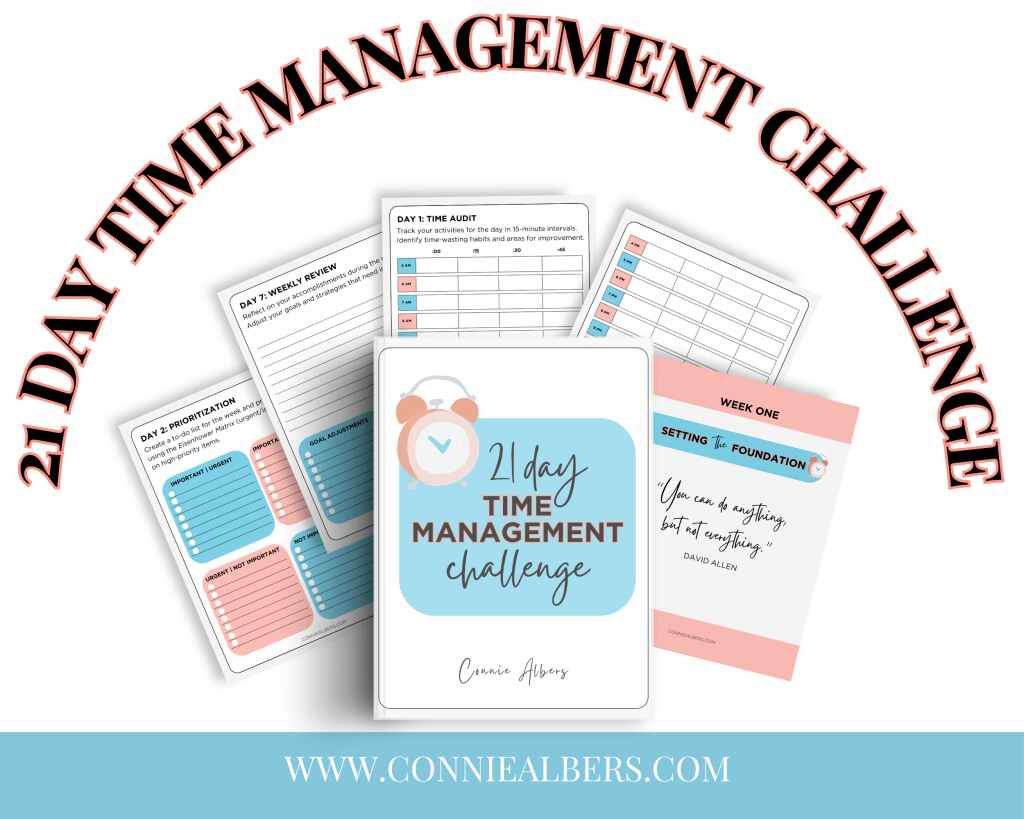
What Is the 21-Day Time Management Challenge?
This beautifully designed challenge is packed with bite-sized daily tasks that help you build better routines, ditch time-wasters, and reclaim your day, without overhauling your life.
From the very first page, Connie speaks to the heart of busy moms with warmth and understanding. She knows what it’s like to feel stretched thin and overwhelmed. That’s why each day’s prompt is doable, gentle, and impactful.
You’ll tackle foundational skills like:
🕒 Time Audits – Get clear on where your time really goes.
📋 Prioritization with the Eisenhower Matrix – Learn what’s truly urgent (and what’s not).
⏰ Time Blocking & Pomodoro Techniques – Maximize your energy with smart planning.
📵 Digital Detoxing – Say goodbye to endless scrolls and hello to focused moments.
✋ Learning to Say No – Protect your time like the gift it is.
By the end of three weeks, you’ll have more than just a list of productivity tools; you’ll have a whole new way of approaching your day.
Why Moms Love This Challenge
Because it’s real, it doesn’t assume you have a nanny, personal assistant, or a clone. It meets you in your real kitchen, with real distractions and real dreams.
Each week of the challenge is themed:
Week One: Setting the Foundation
Week Two: Building Productive Habits
Week Three: Personalizing Your Time Management Plan
You’re not expected to be perfect, just present and open to slight shifts. Whether you’re a stay-at-home mom, homeschooler, or working parent juggling Zoom meetings and snack duty, this challenge will help you find clarity, peace, and purpose in your day.
A Few Favorite Days from the Challenge
Day 6: The One-Minute Rule – Tackle any task that takes a minute or less right away. You’ll be amazed how much lighter your mental load feels.
Day 13: Habit Stacking – Pair a new routine with an existing one (like planning your day while sipping coffee).
Day 18: Learning to Say No – Boundaries aren’t selfish; they’re strategic.
Let’s not forget Day 21: Celebrate Your Success. Youdeserve to look back and see how far you’ve come.
Final Thoughts
Time management isn’t about doing more—it’s about doing what matters, better. The 21-Day Time Management Challenge is a faith-rooted, mom-approved approach to creating lasting change without overwhelm.
You can grab the challenge and follow along at your own pace by visiting ConnieAlbers.com. And don’t forget to check out her podcast, Equipped To Be, for more encouragement and practical wisdom.
Because you can’t pour from an empty cup, this challenge helps you fill yours first.